Friday, September 12, 2008

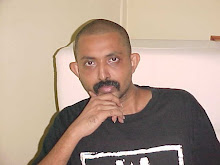
James Gomez to speak at TOC event tomorrow, Sept 13, at Hong Lim Park (selection of videos included)

James Gomez will be a guest speaker at TOC's World Class Service or World Class Profits? event tomorrow Sept 13, 5pm-7pm at Hong Lim Park aka Speakers Corner.

James will be awarded the degree of Doctor of Philosophy at a Monash University graduation ceremony later today. The degree is awarded for his thesis Democracy and elections: The impact of online politics in Singapore.

During the sidelines of the graduation ceremony, he will hold a media doorstop to release the findings of this research. He will take questions on the findings and its relation to the recent announcements on emerging new media guidelines and its impact on Singapore's electoral system.

He will also outline his plans to return to Singapore.

These are a selection of videos featuring James. The first was during the 2006 General Elections; second, an interview given to TOC in May 2008; and finally at a tak boleh tahan event at Toa Payoh in May 2008.


Thursday, September 11, 2008

Seizure of One Nation Under Lee to be raised at 9th session of UN Human Rights Council


One Nation Under Lee seizure to be raised at UN meeting

Singapore Democrats

The seizure of the video One Nation Under Lee by the Government will be raised in Geneva this Friday, 12 Sep 08, during the 9th session of the United Nations Human Rights Council.

Forum-Asia, a regional human rights group, will cite the case along with other human rights violations in the region when it is called to make representation before the UN Council. Apart from the matter of the video seizure, Forum-Asia will also bring up the prosecution of activists for taking part in peaceful protests in Singapore. (Jacob: See here and here)

In May this year officials of the Media Development Authority gate-crashed a private screening of the video and demanded that the film be handed over. They said that the video did not have a certificate of approval.

Despite the seizure, the video has since been uploaded on YouTube as well as Google. The YouTube account alone has received 27,300 views.

The Forum-Asia's representation will also include the situation in Laos and Mongolia. The following is the text on Singapore that will be read to the Council:
...although the [Singapore] government has announced its rules to allow outdoor demonstrations (restricted to the Speaker's Corner), there have been events this year that nevertheless underline a restrictive environment in which human rights defenders are not able to enjoy the freedom of expression and opinion and the freedom to be informed.

In May 2008, a private film screening of One Nation Under Lee was interrupted by representatives from the Media Development Authority who demanded that organisers of the screening hand over the film.

They cited the Films Act which states that it is an offence to have in your possession or to exhibit or distribute any film without a valid certificate. This provision therefore makes almost all Singaporeans hosting private screenings of private events violators of the said Act.

The government has also charged more than 20 activists for taking part in various activities such as peaceful protests and distributing flyers.
Readers can follow the live webcast of events at the session at http://www.un.org/webcast/unhrc/index.asp.

One Nation Under Lee is also the subject at the Freedom Film Fest 2008 in Malaysia. It was screened in Penang last weekend and will be screened in Johor Baru this Saturday, 13 Sep, at 4:30 pm.

Malaysia's premier showcase of human rights films will travel to Johor Bahru this weekend. It will be the closest location by which Singaporeans can watch One Nation Under Lee in a public space. Director Seelan Palay will be present at the post-screening Q&A session.

Venue: Tropical Inn
Address: 15 Jalan Gereja, Johor Bahru
Dates: 12 to 14 Sept 2008
Time: 11am till 10pm
Admission is FREE

Monday, September 8, 2008

U.S. Blogger, Gopalan Nair aka Singapore Dissident, pleads innocent, to stand trial in Singapore


US blogger pleads innocent, to stand trial in Singapore

AFP - Monday, September 8

SINGAPORE - An American blogger charged with insulting a Singapore judge pleaded innocent in court Monday and vowed to contest the allegation.

Gopalan Nair allegedly accused a judge of "prostituting herself" by being biased in favour of Prime Minister Lee Hsien Loong and his father, former premier Lee Kuan Yew, in a defamation case they filed against an opposition politician.

"Not guilty," Nair, who is representing himself, told the Supreme Court when asked to enter a plea after the charge was read out.

The judge, Belinda Ang, had presided over the case against Singapore Democratic Party leader Chee Soon Juan.

Nair, a former Singaporean lawyer who has US citizenship, allegedly wrote on his blog that she was "nothing more than an employee of Mr Lee Kuan Yew and his son and carrying out their orders," according to the charge read out in court.

The 10-day hearing was to have begun Monday but was adjourned for two days at Nair's request to allow him more time to prepare his defence and settle personal matters.

Nair also said he needed to arrange for money to be sent from the United States to pay a 3,000 Singapore dollar fine (2,117 US) issued against him in another case.

Nair was found guilty last Friday for abusive behaviour against two police officers and disorderly behaviour.

Under Singapore law, Nair faces a jail term of up to one year and a 5,000 Singapore dollar fine if found guilty of insulting a public servant.

Nair was to have faced a second charge of insulting another judge, but the state prosecutor told the court the charge would be "stood down." A legal expert said this means that charge would be heard separately.

For the archives: Film-makers on the fringe

This is a Straits Times report which was published on 5 Sept 2008. The only difference between what i've posted here and the original report are the links which are of my own doing. I'm posting this report here mostly for archival purposes.
Film-makers on the fringe

By Sue-Ann Chia, political correspondent

WHEN the death knell sounded on a 10-year-old law that imposes a total ban on political films two weeks ago, film-maker Martyn See cheered.

The move marked the biggest effort in 20 years by the Government to loosen its hold on political expression here, declared the 39-year-old.

As a mischievous tribute, he pulled together 100 films on local politics, compiling them on his blog a week after Prime Minister Lee Hsien Loong said in his Aug 17 National Day Rally speech that an outright ban on political films was no longer sensible.

The 100 short clips - 'films' is too formal a term to describe them - are the work of assorted groups and individuals, most with a decidedly anti-establishment stance.

They include two by Mr See which did not make the censor's cut. One is on Singapore Democratic Party (SDP) chief Chee Soon Juan and the other on former political detainee Said Zahari.

He plans to re-submit them to the Board of Film Censors once the ban on political films is formally eased - likely early next year - just to test the new system.

He wants to do so because the prospective change comes with caveats: Films which are partisan or give a distorted and slanted impression will still be off-limits.

His own view is that there should be no caveats. 'If it is not sheer stupidity to continue enforcing bans on these films when they can be viewed at a click of a mouse, I don't know what is,' he wrote on his blog.

How did he come to be such a fighter against Section 33 of the Films Act, which bans party political films?

Political awakening

ATTRIBUTE it to a second political awakening that came in the wake of the 2001 general election.

He had had a first awakening back in the mid-1990s, when a photocopy of a banned book came his way.

The book was To Catch A Tartar, written by former solicitor-general Francis Seow, describing his detention under the Internal Security Act in the late 1980s.

'My eyes were opened to the darker side of the PAP's history,' he says.

'I read it from cover to cover. I felt...frightened, depressed and angry at the same time.'

His hitherto placid political outlook changed then, but it was only later - after the November 2001 election - that he was really roused into action.

What caught his attention was Dr Chee Soon Juan heckling then prime minister Goh Chok Tong about an alleged loan to former Indonesian president Suharto.

'Chee Soon Juan got hammered very badly. I wondered, is this guy as bad as the media made him out to be? So I decided to check him out myself,' he says.

A few months later, in 2002, he asked to meet Dr Chee.

For the next two years, he 'interviewed' the SDP leader regularly, visited him at his home and his office, and observed him when he staged public protests - filming all the while.

He had reams of footage but no film, until Mr Lee Hsien Loong was sworn in as Prime Minister in 2004.

Mr Lee's inauguration speech, promising the opening up of civil society, inspired him to compile his shots into a 28-minute film which he titled Singapore Rebel.

He submitted it for screening at a film festival. But the film never made it past the censors.

It was deemed 'party political', and banned under Section 33 of the Films Act.

He was questioned four times over 15 months by the police and even had his video camera seized.

'They dropped the investigation a couple of months after the 2006 general election. I guess they wanted to watch if I would participate in the election,' he says.

He never did. But he continued to produce politically incorrect films.

Singapore Rebel

MR SEE titled his directorial debut Singapore Rebel. Although about Dr Chee, it sums up Mr See himself - someone bent on capturing alternative politics on celluloid.

He began his film-making career nearly 20 years ago, right after national service, learning the ropes of video editing in production houses. Along the way, he became a freelance video editor, working for renowned local directors such as Mr Eric Khoo and Mr Jack Neo.

He spends 90 per cent of his time doing such work to 'pay the bills', but the remaining 10 per cent is now consumed by his passion - making films on local political issues.

While being questioned by the police over Singapore Rebel, he produced another film, on former political detainee Said Zahari. This was also banned.

His latest, on Dr Chee and the protests he staged during the IMF-World Bank meetings in 2006, however made the cut. Speakers' Cornered was given an NC-16 rating and screened at the Substation on July 26 this year.

Despite the overwhelmingly pro-opposition - especially pro-SDP - angles in his films, he insists he is not an opposition supporter or sympathiser.

He says: 'I fill a vacuum created by the media when they don't cover opposition politicians or political dissidents. I consider myself a citizen journalist, not a Michael Moore type of film-maker.'

Asked why he bothers to submit his films for classification when he can upload them on YouTube, he deadpans that the law requires it.

The more compelling reason is that he wants to push the envelope in the area of political expression.

'Who better to do that than me,' he says, 'since I'm already over the OB markers. I want more film-makers who want to document the political scenes to emerge.'

In this, he has found a following of sorts.

Mr Ho Choon Hiong, 33, first heard about Mr See when Singapore Rebel was banned three years ago.

He was among a group of 12 film-makers who wrote to the Government then, asking for greater clarity as to what constituted a party political film.

The incident led to him meeting Mr See.

Their subsequent exchanges emboldened him to capture on celluloid assorted scenes of political activism in Singapore.

Unlike Mr See, he was introduced to politics early by his father, who used to be a student activist at Chinese High School in the 1960s.

Like Mr See, however, his political interest was stoked by the 2001 polls and Dr Chee.

After meeting Mr See, he produced a plethora of very short films, on topics ranging from the 2006 election to protests by Myanmar nationals in Singapore. He sent six to the film censors for classification in May.

'I have to take a few steps and hope to be undeterred more and more,' says the film studies graduate from Ngee Ann Polytechnic.

'I want to put my own perception of truth out.'

So far, his 'films' have been ignored by the authorities.

A prolific activist

NOT so for Mr Seelan Palay, 24, another amateur film-maker.

He had his film, One Nation Under Lee, seized by officials from the Board of Film Censors as it was being screened in a hotel recently.

The reason: It had not been passed by the censors.

His first effort - detractors panned it as a slide show rather than a film - it portrayed Singapore as lacking in press and political freedom, and tightly controlled by Mr Lee Kuan Yew.

Point out that One Nation Under Lee is decidedly one-sided - it takes potshots at the Government while hailing Dr Chee as a hero - and he insists he has no political agenda.

He isn't politicised by anyone either, he insists.

'I learnt everything from reading, out of personal interest,' says the activist.

He has been involved at various times with the Vegetarian Society, the Animal Concerns Research & Education Society, and the now defunct SG Human Rights Group.

Earlier this year he attended rallies by Hindu protesters in Kuala Lumpur, and upon his return to Singapore, decided to mount a one-man protest fast outside the Malaysian High Commission.

He also takes part in protest actions organised by the SDP occasionally.

He is not a troublemaker, he insists. He is just doing what he believes in.

Nothing to fear

WHAT keeps the trio going?

'Our conscience pricks us,' says Mr Ho. He sees it as his duty to document what he believes gets sidelined by the mainstream media.

The trio use the same counter when you point out that their version of 'truth' sometimes takes an extreme slant. Others have noted that it was the publicity over the banning of some of their films, rather than the quality of the films themselves, that made the public more keen to view them.

But they are not perturbed.

For Mr See, his mission is simple.

'I live by the Singapore Pledge. I live by the Constitution that guarantees freedom of expression, association and assembly,' he says.

And he aims to guard these freedoms by showing that there is nothing to fear.

The other two, less articulate about their aims, appear to go with the flow as acolytes of Mr See, enjoying the thrill of defiance every once in a while.

They are all drawn to Dr Chee, whom they see as championing freedom of expression and provoking the Government with his illegal public protests.

Still, they say, they have no intention of joining the SDP or any political party. Ironically, they fear being hemmed in by party discipline.

Mr Palay, for instance, will tell you that he supports the SDP's cause but has no wish to sign on as a member.

Have they made an impact on the political scene? They believe so, pointing to more local film-makers who remain anonymous but, like them, upload political-type films on YouTube.

They also claim some credit for the Government's decision to consider lifting the ban on political films.

It was, they say, the banning of Mr See's Singapore Rebel that sparked a debate on the relevance of the Films Act.

Future films

FOR now, the three men have film ideas that they hope will see the light of day.

Mr Palay wants to do a film on the unspoken rule limiting use of dialects in films.

Mr Ho is aiming to do documentaries on two women: Dr Chee's wife, and his own long-lost Malaysian nanny whom he is still trying to locate.

As for Mr See, he has two targets too. One is the reclusive former political detainee Chia Thye Poh. The other is Minister Mentor Lee Kuan Yew.

In the latter film, he wants to trace the People's Action Party's formation and rise to the pinnacle of power in Singapore.

Why do a film on the PAP when its story has been told so many times before? 'It is a compelling story,' he says.

So are they really rebels with a cause?

Says Mr See: 'There's definitely a purpose to what we're doing. I see it as lessening the climate of fear here.

'I want more film-makers like me to emerge, wanting to document the political scenes in Singapore.'

Sunday, September 7, 2008

Paths Not Taken - An alternative history to the "Singapore Story"

I would like to recommend this book i've been reading. Its called Paths Not Taken: Political Pluralism in Post-War Singapore. Its available at bookstores like Borders, Select Books and Kinokuniya.

I wanted to give my readers some excerpts from the book. I'll probably do that later on. Meanwhile this is from Select Books' website about the book,
Singapore's era of pluralism between the 1950s and 1970s is a largely overlooked part of the country's recent history. It was a time of extraordinary cultural, intellectual and political dynamism: students, labour unions, ambitious political contenders and representatives of the various ethnic communities all stepped forward to offer alternate visions of Singapore's future from across the entire political spectrum. They generated ideologies, priorities, perspectives and social visions such as mainstream "official" politics had never known before and has not seen seen since.Most of the papers in this volume were first presented at a conference organised by the Asian Research Institute of the National Univerrsity of Singapore in 2005.

The contributions weave an alternative history to the "Singapore Story". They reveal a cast of significant players who offered real alternatives to the enduring PAP model and not the false starts they have often been portrayed as, thereby illuminating paths that were eventually not taken. This book will remind older Singaporeans of pages from their past and provide a younger generation with a novel perspective of Singapore's past struggles.
And you can read here about the project and conference that led to this book.

Saturday, September 6, 2008

Pressure Builds on Singapore's System - FEER

The following article is written by Hugo Restall, editor of the Far Eastern Economic Review or FEER which, by the way, is being sued for defamation by Prime Minister Lee Hsien Loong and his father, Minister Mentor Lee Kuan Yew.
Pressure Builds on Singapore’s System by Hugo Restall

Posted on Sept. 5, 2008

During the National Day festivities last month, Singapore Prime Minister Lee Hsien Loong’s gloomy prognosis for the economy—a “bumpy year” ahead—was overshadowed by even more dire warnings that the city state is about to start running low on its main resource, people. With an aging society and one of the lowest fertility rates in the world at 1.29, the government is pulling out all the stops, doubling the budget of baby-making incentives to $1.13 billion. Meanwhile, in order to make Singapore a more tolerant and pluralistic place, political videos will be allowed, as well as protests in a downtown park.

It’s all straight from the ruling People’s Action Party’s standard playbook. Play up the anxiety of a small nation beset on all sides, in need of a strong government to take positive action to avert disaster. Individual citizens who are failing to live up to the expectations of society need to be brought back into line. At the same time, leaders are willing to give those citizens a few of their rights back, as long as they are not used to undermine harmony.

Since Mr. Lee took over the premiership in 2004, Singaporeans have been watching for any sign he plans to reform substantially the authoritarian state created by his father, Singapore’s founding Prime Minister Lee Kuan Yew. So far there has been little indication that in his heart the prime minister is a liberal democrat. But the system of control is coming under increasing stress due to the changing structure of society. A process of subtle change will continue to be driven by pressure from below, rather than a change of heart at the top.

Last month’s gestures far fall short of lifting what the opposition calls the climate of fear—past experience, such as the detention of former Solicitor General Francis Seow in 1988, suggests that retribution for challenging the PAP can come in many forms, from bureaucratic harassment to detention without trial under the Internal Security Act. The government is making a virtue out of necessity by lifting the 10-year-old ban on making or showing political films, and allowing political podcasts during election campaigns. Oppositionists were successfully skirting the restrictions, so that they only served to hamstring the PAP's own efforts to utilize online media. The opening of a protest area is a token gesture, which no doubt will be raised to deflect international criticism the next time police arrest dissident politician Chee Soon Juan for illegal assembly. In that sense, the move suggested that Mr. Chee’s campaign of civil disobedience is causing some heartburn within the regime.

But the real problem is not Mr. Chee—the stressors on Singapore’s political machine lie elsewhere. The PAP’s legitimacy has always rested on its performance, backed by trust in the party. Given its chaotic past and neighbors, Lee Kuan Yew argued, the tiny country could not afford the risks associated with liberal democracy. In the past that argument was largely taken at face value by the Chinese working class, despite the experiences of other Asian nations that contradicted it. Today, however, there is more apathy than agreement. No one seriously questions the PAP’s track record of governance or probity of its top leaders, yet trust is giving way to resentment at the party’s arrogance.

The main proof is in the erosion of the party’s share of the popular vote in elections. In 2006, it hit 66.6%, down from 75% in 2001, and 75.6% in 1980. In the past, opposition parties deliberately refrained from contesting more than half of the seats, since they found that while some Singaporeans wanted to cast a protest vote, they would not vote for the opposition if there was any chance the PAP would be thrown out of office. But in 2006, the opposition contest 47 of 84 seats, suggesting that the PAP’s hold on voters’ loyalty is not as fearsome as before.

Why is this? For one thing, Singaporeans are better versed in critical thinking. During the 1980s and '90s, people may have grown wealthy, but they remained politically unsophisticated. Development happened so quickly that it took decades for education levels to catch up. According to the government statistics, between 1990 and 2005 the percentage of the population with a university degree grew to 17% from 4.5%. That is matched by an even more dramatic shift in individual age cohorts—in 2005, 32.1% of 30-34 year olds had a university degree, as compared to just 6.6% of 50-54 year olds. The language spoken at home is now predominantly English, meaning that Singaporeans are increasingly able to learn about and interact with the outside world.

Moreover, the PAP has pushed the economic structure of the country in a direction that is no longer win-win for all classes. A certain amount of economic inequality is tolerable as long as there is a sense that everyone’s lives are improving. But inequality and real hardship are on the rise, as inflation running at 6.5% erases the 3.3% wage gains that the poorest tenth of the population enjoyed last year, even as the top tenth picked up an 11.1% increase in income. PAP loyalists control a lucrative web of government-linked companies, while ministers have also picked up big pay rises, since their salaries are indexed to the private sector, making them some of the world’s highest paid politicians. As for social mobility, the top scholarships, which are a ticket into the elite, increasingly go to students from wealthy families that live in private apartments, rather than public housing.

Despite this trend, the PAP is unwilling to dismantle its policies of holding wages low in order to attract multinational companies to invest. This was a strategy born of necessity in the 1960s, when Singapore was short of capital and struggling to catch up with Hong Kong’s model of creating an export-oriented growth. Today it is economically obsolete, yet it suits the government politically because the combination of state-owned companies and politically quiescent multinationals prevents the emergence of an independent commercial class that might push for political change.

The result is a top-down economy which is running up against the limits of its capacity to drive growth. Without an entrepreneurial class and successful home-grown companies, Singapore’s productivity growth has historically lagged behind that of its laissez-faire twin, Hong Kong. As University of Chicago economist Alwyn Young showed in a 1992 paper, Singapore had one of the lowest returns on physical capital in the world. Its growth has been fueled by forced savings programs shoveling ever increasing amounts of capital into the furnace, rather than by innovation or managerial efficiency.

Mr. Lee’s administration has found that the only way to defuse public dissatisfaction is to do something the PAP consistently condemned as the hallmark of Western democracies: Give away money. The government used to damn welfare as a dirty word, yet transfer spending is on the rise. This year, $2.1 billion in giveaways were planned. Then last month Mr. Lee announced a 50% increase, totaling $179.8 million, in utility rebates and “growth dividends”—cash payments to households that started in 2006. The new prime minister has brought in other social spending programs for the poor. For instance in the 2008 budget, the Ministry of Manpower’s expenditure rose by 184%, almost entirely due to a new scheme of workfare, the $306 million Income Security Policy Programme.

The pressure for more entitlements will only grow as retirees find that their savings do not provide enough of a cushion. The compulsory government-run Central Provident Fund sucked up a huge percentage of income to finance the state’s development goals, but offered dismally low returns. As a result, many of the generation that built the Singapore miracle now finds itself eking out a retirement in public housing while the government surpluses remain under the management of the PAP.

Beside the carrot, there is also a stick. Starting in 1985, the PAP began to warn voters that if they supported the opposition, their government-built apartment buildings would not get priority for maintenance. This was gradually refined to the point that in 1997, then Prime Minister Goh Chok Tong explicitly campaigned on the promise that individual precincts would get housing renovation spending according to their votes. When the U.S. State Department condemned this as undemocratic, the interference of foreigners was used as another rallying cry.

Indeed, it seems that Singapore is increasingly cursed with the shortcomings of a democracy without enjoying the benefits. During the 2006 campaign, Prime Minister Lee inadvertently blurted out his fears of what would happen if there were more opposition members of parliament: “Instead of spending my time thinking what is the right policy for Singapore, I’m going to spend all my time thinking what’s the right way to fix them, to buy my supporters’ votes….” Putting aside the ominous sound of “fixing” opponents, the remark was ironic because the PAP now expends so much effort to buy the support of the populace with giveaways, all in order to avoid the transparency and accountability that a vibrant opposition would bring.

Some younger Singaporeans with skills respond to this by voting with their feet, moving abroad to find greater freedom and a higher standard of living working with the kind of entrepreneurial companies that Singapore has yet to create. In order to eventually win some of them back, the possibility of recognizing dual nationality is increasingly discussed, a move that would represent a huge concession for a nation-building party that demands self-reliance and sacrifice of its citizenry.

In the place of the émigrés, foreign workers are flooding in to man the factories, docks and construction sites, as the government steadily opens the doors wider. Foreign workers already account for more than one million of the total population of 4.6 million. Among the immigrants are talented individuals like the Chinese table tennis players who provided the country with its first Olympic medal last month. But they lack the loyalty to the country that the PAP has put a premium on.

If Singapore were a plural democracy, it would no doubt have developed an independent civil society capable of binding together the native-born and immigrants, providing mutual support. But the PAP and Lee Kuan Yew are like the African baobab tree, whose spreading canopy hogs the sun and prevents other trees from growing up underneath. Such a society may be easier to control, but it is also alienated and rootless, jealous of others’ gains—the oft-quoted national characteristic, kiasu, literally means “fear of losing.” In a developed economy that depends on attracting and retaining creative individuals, this has become a significant handicap.

The arrogance of the winners in society is becoming a major issue. The elder Mr. Lee’s ego is legendary, but given his accomplishments it is perhaps understandable. When his minions take on similar airs, however, it is a different story. In one extreme example two years ago, a furor erupted after the daughter of MP Wee Siew Kim used her blog to berate a man afraid of losing his job as “one of many wretched, undermotivated, overassuming leeches in our country” who should “get out of my elite uncaring face.” To make matters worse, Mr. Wee tried to defend her remarks.

Naturally the PAP is aware of these trends and that its monopoly on power has become an important issue in itself. Over the years it has tried to come up with mechanisms for citizens to register their complaints and blow off steam. The government no longer seeks to destroy all opposition, leaving alone and even praising those tame MPs who focus on constituents’ issues rather than the PAP’s system of social control. Yet ultimately there is no solution to this problem, since the party is unwilling to share power in any meaningful sense.

A siege mentality has been the hallmark of Singaporean politics for four decades, often with good justification given hostile neighboring governments to the north and south. Yet it is increasingly hard today to see how that anxiety can be justified and maintained. The generation now coming onto the political scene grew up in at least moderate prosperity, and may not be so easily bullied into voting for the PAP. It is eager to put down roots and create a civil society. So far the PAP has finessed this aspiration without compromising its control.

Prime Minister Lee can afford to be sanguine for now, with the security apparatus, corporatist economy and civil service all at his command. Yet if this economic downturn worsens, he will be confronted with a more difficult choice of whether to accede to demands for greater pluralism. As academic Michael Haas once wrote, “Whenever the public exercises the independence of thought that better education brings, ‘a danger to be nipped in the bud’ or some similar cliché is articulated as the basis for repression.” It bears remembering that the laws like the Internal Security Act that have been used in past such exercises remain on the books. If pushed too hard, Lee Hsien Loong still has the means to prove he is his father’s son.

Mr. Restall is editor of the REVIEW.

Friday, September 5, 2008

Text of Dr Chee's speech at the launch of his new book, A Nation Cheated

This is the text of Dr Chee Soon Juan's speech at the launch of his book, A Nation Cheated, during SDP's 28th anniversary dinner of 31 Aug 2008. I've combined Parts One and Two of the speech in this post,

When I was in jail in 2006, I re-read the book Comet In Our Sky, a compilation of essays written by friends and associates of the late Lim Chin Siong. I will assume most of you here know Lim Chin Siong and will not endeavour to go into detail how he was seen by the majority of Singaporeans as the natural leader of our then fledgling republic in the 1950s and 60s, other than to say that his charisma and compassionate style of leadership won the hearts and minds of many.

The book includes a chapter written by Professor of Southeast Asian Studies, Tim Harper, from Cambridge University. Professor Harper documented his research after poring through bundles of de-classified papers, memos, letters, etc. written by Britsh colonial officials during the turbulent period leading up to Singapore's independence.

The picture that emerged was one not quite the story that I heard and read growing up. In a nutshell, the Professor's account was that the people of Singapore wanted Lim Chin Siong as their leader but the British would not allow it and wanted Lee Kuan Yew instead.

So we have two versions of what happened: one written written by a disinterested, third-party academic and based on verifiable de-classifed papers, and the other by Lee Kuan Yew who still has vested personal interests in telling these events. I do not think I would be far wrong if I say that the majority of people would look to the former for a more accurate and objective account of that part of history.

This is what I tried to do in the first part of A Nation Cheated, that is, summarise Professor Harper's research findings.

But my nerves are rubbed raw when I keep hearing Lee Kuan Yew, who came to power backed by the colonialists, rant about how the West should not foist its system on an Asian people, meaning us. Somehow the democratic practices that allowed Lee Kuan Yew to become prime minister suddenly become Western and not suited for us Singaporeans.

Today the propaganda continues unabated, that Singaporeans are not interest in human rights and democracy. I will come to this subject in a moment and show you how this lie has now been exposed.

For now, let me dwell a little on the notion that things have worked worked wonderfully for Singaporeans.

Whether it is our CPF or healthcare costs or wages or our financial reserves, I have presented evidence in the book to show how things are not quite what they seem. I have tried to stay away from polemics especially in part two of the book and concentrated on putting together the data from alternative sources to make my case. I will leave it to you the reader to decide for yourself whether I have done my job or not.

To illustrate what I really set out to say in this book, I want to relate a story. It is about a man whom I met when I went for my jog one morning. He is in his mid-seventies and works for the town council as a cleaner. He starts work at 7 am and knocks off at about one or two in the afternoon depending on how much work there is that day. He works six days a week. His salary? $400 a month.


When he was a young man in his 20s, he was told that if he just stayed disciplined, didn't support independent unions, didn't clamour for his rights and trusted the PAP to govern in his best interest, he would be better off. He did that, or at least he wasn't given a choice.

Today, he is told that he must not think of retiring. In fact he is told that he needs to work for less pay. He is told that part of his savings is in Merill Lynch and in about 15 to 20 years, he should be able to start seeing returns on the investment, that is if the bank doesn't go belly up first.

Doesn't the word "cheated" come to mind?

This old man's story is not an aberration. Statistics tell us that our poorest segment of society continue to see their wages shrink. Fifty percent of the people haven't seen their incomes grow over the past ten years.

But then our ministers increased the salaries in 2007 by a heart-stopping 85 percent. The president is paid $4 million a year, for what no one quite knows. The Senior Minister and Minister Mentor are also paid close to that amount, again for what no one quite understands. The Prime Minister is paid $3.8 million which works out to be about $10,000 a day.

They tell you that they must be amply rewarded for building such a fine country. Really? Let's see what Singaporeans think:
* Despite having gone through national education at school, 37 percent of Singaporean youths say they are not patriotic. More than 50 percent want to emigrate overseas if given a chance. (Channel News Asia, 17 January 2007)
* Another survey of older Singaporeans showed that two-thirds said they have considered retiring in another country. (Straits Times, 20 August 2008)
* A few weeks ago, the Government confirmed that an average of 1,000 Singaporeans had given up their citizenship annually over the last three years. (Asia Times, 21 August 2008)
Have you thought of this number before, ladies and gentlemen? These are astounding figures. I cannot think of another country where after 50 years of uninterrupted rule, we produce a nation where its people profess no love for it and can't wait to get out?

Tell me, hand on heart, that you still think that the PAP has governed in the interest of Singapore and Singaporeans. Tell me that we have not been cheated.

Singaporeans not interested in human rights?

The Government insists that we Singaporeans exist only to make money. Human rights are not in our makeup. To Singaporeans, even Martian values are less alien than democratic ones.

This really seemed the case because for years when I talked about protests, people looked at me as if I was a raving lunatic. I'm sure many still do. Here is this island paradise that works and here is this green-eyed monster wanting to tear everything down.

And when I embarked on a course of civil disobedience, even some of my more progressive associates thought that I had really lost it, that I had gone too far. When I stood up at Raffles Place during lunch nearly ten years ago on 28 December 1998 and made a speech without a permit, I was roundly and almost universally castigated for being a radical who could not see that Singapore was different and that Singaporeans were not interested in their civil and political rights.

Mr Lee Kuan Yew said then that if we allow such activity on the streets, "there'll be pandemonium. We are not that kind of society."

Several months later he was confronted in Davos, Switzerland if my memory serves me correctly during the World Economic Forum by William Safire, a New York Times journalist and former speech writer for Richard Nixon, who asked him point blank whether he would allow free speech in Singapore. The MM said he would consider it.

Whether he was caught by surprise and didn't want to look bad and so said that he would consider it, no one knows. But shortly thereafter Speakers' Corner at Hong Lim Park was established.

That gave me the first glimpse of how civil disobedience could work. I knew that with the right strategy, we could win or, at the very least, extract concessions from the Government.

I didn't stop there because restricting free speech to a grass patch beside a police station was a human rights joke. And so we pressed on, now focusing also on freedom of assembly, that is, the right to stage peaceful protests.

Again I was chastised and called all sorts of names from being a show-off pulling on publicity stunts to playing up the to the West to being a traitor, undermining the interests of Singapore. But I knew deep down in my heart, I was right and they were wrong.

All through this, a few people remained steadfast with me. Gandhi Ambalam was one of them. Together we persisted and we fought on. Slowly our numbers began to grow.

A stunning admission

Now years later and after several arrests and prison terms, the Government has finally acknowledged the moral imperative of the freedoms of speech and assembly. Last week, the Straits Times reported:
Asked by an undergraduate if the move towards more political openness was done out of 'necessity', Mr Goh replied: 'Necessity, in a way. Because to be relevant as a government, you must know the aspirations of the people.
What are these aspirations? He answered the question in his next sentence which is a stunning admission of the reality:
'We can control you, oppress you. But we'd lose you - you'll move elsewhere. So we have to move with the times.'
He hit the proverbial nail right smack in the middle of the head. Mr Goh has acknowledged that the aspirations of the people are to live in a society where they are not controlled and oppressed, in other words they want a democratic Singapore. What's all this talk about Singaporeans not being interested in human rights?

What was political and social taboo only a couple of years ago is now accepted by the Government as a necessity. This admission is much more significant than the Government's decision to allow protests at Hong Lim Park because for the first time the PAP has conceded the legitimacy of public demonstrations.

But it wasn't put on a platter for us. We had to fight for it. We had to sacrifice for it.

I tell you this not to claim credit or to gloat for there is nothing to gloat about because nothing has been achieved yet. I tell you this because I want you to see that the PAP is not this immovable wall that we keep talking about and we are certainly not the eggs. I want to banish the unfortunate and long-held perception that it is no use going aganist the PAP because we just cannot win.

Martyn See's production of his films despite the prohibition of the Films Act is another case in point. It started it 1996 where I wanted to make a video about the SDP and we produced a 20-minute documentary. There was no law against that but the Government banned it anyway and thereafter passed legislation to outlaw political videos.

Martyn challenged that law by breaking it. Today many can see the absurdity of the law and the real intention behind it and the PAP is under pressure to amend it.

The truth of the matter is that the Government can be made to back down. You have seen with your own eyes that civil disobedience, if carried out in an astute and disciplined manner, works.

Civil disobedience is not just about breaking laws will-nilly and challenging the authorities on a whim and fancy. There are moral considerations and the responsibility is a heavy one to bear. Civil disobedience is not about unruliness and anarchy. It is a form of civil action that requires strict discipline and sacrifice on the part of the people who advocate and practice it.

It is an effective method of compelling autocrats to listen to the people, of wrenching power back to the people.

Confronted with an authoritarian regime that is unwilling to reason and be persuaded to mend its ways, civil disobedience becomes a necessary weapon and, I repeat, it works.

Change is afoot

It works because of a few factors are at play one of which is that times are changing. The dusk of an old era is passing on and the dawn of a new one is upon us. Change is waiting to be born. The Government knows that. It knows that change is inevitable.

But if we don't act now, nothing will happen. If we don't become the deliverers of change, then change will be stillborn. This is because there are still some very powerful forces against change and power never concedes without demand.

In other words, people like you and me who want to see change must demand loudly and clearly for reform. We cannot just be spectators. We must be the advocates and the agents of change.

The time is right and the conditions favour the reformers. We have the New Media, we have an educated population, and we have the fading away of an old era. These factors are coming together and they spell change.

The biggest, and possibly fatal, mistake that we in the pro-democracy camp can make is to freeze at this point. At a juncture in history when we have momentum and favourable conditions on our side, the worst thing to do is nothing. If we do that we will lose the initiative and the progress that we have made will be irretrievably lost.

No, there is not a moment to tarry. Now is the time to press home our advantage. Now is the time to ensure that we consolidate on our gains and push further into our opponent's territory. We must let the PAP know unequivocally that it either opens up the political process or it as a Government will become irrelevant.

We must seize the day. Carpe diem! Make that change that we are all capable of, that we all have a duty to carry out, that we all owe to ourselves and our children to effect.

Carpe diem! Seize the day!

Challenging the laws

In the weeks ahead, 17 of my colleagues and I will face a trial for taking part in an assembly and procession without a permit. Many of us are prepared to go to prison. We can't wait to go to court and face the judge and prosecution and to tell the world how politically ridiculous and morally offensive this Government is.

We all know that it is the Government that has done wrong, not us. We are proud of what we have done. In fact we pledge to do it again. We may have to pay the price of sacrificing our liberty, but that is an honour. That is something we are proud of and want to tell everyone rather than hide it. For what can be a higher honour than to be jailed for the sake of justice and freedom?

This is not just false bravado. It is detemination and resolve borne out of an extended process of self-examination and confronting our own fears.

This is not just a political fight, it is a moral fight as well. It is a struggle for justice, a struggle against the preponderance of greed and exploitation by those who rule over us, a struggle for the lives and dignity of the hundreds of thousands of our fellow Singaporeans who are consigned to live more like serfs than citizens.

We need your support

But as clear and as determined as we are, our campaign cannot succeed without your support. As many activists have stepped forward, I hope all of you too will step forward to play your part. The more we get into our ranks the quicker will be the change.

The PAP is like the guy standing on the shore and trying to stop the tide from coming in. Don't stand on the sidelines. Get in and be part of the tide. Be on the right side of history. I tell you today that victory will be ours. I say this not out of hubris and cockiness but a very humble reading of history. No authoritarian regime will last forever and when an idea whose time has come no one, absolutely no one, can stop it.

We will be announcing a major protest-campaign hopefully in the not-too-distant future which will include but not be limited to the Speakers' Corner. We will need your support physically, financially and morally to make it a success.

But for tonight, I would like to ask you for your support. Join us, contribute financially, be on our mailing list and come to our meetings and functions so that together we can strategise our campaign which is slowly turning into a movement.

Let this truly be a new beginning in the chapter of Singapore's journey to democracy. With the advent of new technology and the determination and passion of democracy activists, freedom is not far away.

Now is the time to tell the Government that we want transparency, we seek accountability and we demand democracy.

It has been said that it is far better to light a candle than to curse the darkness. Light that candle in your heart and together we can make the flame of democracy burn brighter and ever more iridescent.

Thank you once again for honouring us with your presence this evening and on behalf of my fellow Singapore Democrats, I wish all of you the very best.

I leave you with this thought: "You may never know what results come of your action, but if you do nothing there will be no result."

Thank you and good night.

Tuesday, September 2, 2008

Civil disobedience works...yes, even in Singapore!

Read A party that knows how to party for a report on SDP's 28th anniversary dinner which was held on 31 Aug 2008. Click here to view a slideshow of what went on at the dinner. Dr Chee Soon Juan also launched his new book A Nation Cheated at the dinner. On a related note, its also worth reading yawning bread's The first fruits of civil disobedience.

Photos from first day of "relaxed rules" allowing public demonstrations at Speakers Corner

This blogpost was originally posted at 0045hrs. It has been updated at 1155hrs with a TODAY report at the end.

The new "relaxed rules" took effect yesterday as part of a so-called political liberalisation.

I took these photos when i was there from about 7.20pm onwards. What stood out for me were these leaflets, small and large, written in Chinese, which were pasted on the Speakers Corner sign/information boards located around the park. When i asked an elderly Chinese man, who was passing-by, what the leaflets said, he just told me its about grievances on many issues Singaporeans have with the PAP government. (Click on photos to see a larger version)


These are the rest of the photos i took. Hearer of Cries, a non-profit group according to its website and a Feb 08 report, which offers help to abused maids was the only one to hold a demonstration on the first day,


Softly spoken at the Corner

TODAY, Sept 2, 2008

Tan Hui Leng

THUS was a milestone in free expression marked: A lone businessman putting up posters to draw attention to failed overseas investments, and a group staging an express demonstration on the plight of abused maids.

But if such fledgling efforts at public demonstrations were disappointing to some who turned up expecting far more fire, at least, it was not the no-show that had been expected originally.

At about 9am yesterday — the first day that rules were relaxed at Speakers’ Corner at Hong Lim Park — 52-year-old businessman Teng Liang Huat registered to put up an exhibition that afternoon.

And at the last minute, non-profit group Hearers of Cries, which had earlier registered its evening event as a speech, decided to change this into a demonstration instead, complete with banners.

Much fanfare had led up to the liberalisation of rules: A police permit was no longer needed to speak at the park, visual aids were allowed as were sound amplifiers. Scenarios such as the burning of political effigies or a gay pride parade had seemed real possibilities, with authorities not objecting when these were suggested to them.

So it was that many, like retiree Roger Poh, 61, dropped by in keen anticipation yesterday evening, to see what would take place.

Mr Poh, who came all the way from Jalan Kayu, felt short-changed by the 22-minute ‘demonstration’ from Hearer of Cries – it began with founder Mike Goh appealing for whistle-blowers on maid abuses, after which a volunteer dressed up as an abused maid (complete with paint-on bruises and neck brace) appealed for help.

The speeches lasted less than three minutes in all.

“I’m very disappointed, I expected more,” Mr Poh told TODAY. “I was hoping for demonstrations at the last minute on more controversial topics such as ERP, ministerial salaries and cost of living. This (maid abuse) issue is innocuous. It’s an anti-climax.”

Alan Tan bemoaned the turnout of about 30 to 40 persons. “I though all of Singapore knew, why are they not here?” asked the 50-year-old teacher. “It’s Teacher’s Day today – we should see more students and teachers. Are they scared or are they just not interested?”

And where was the opposition, or other local activists, some wondered.

As Mr Poh said: “It’s the first day and all the media is here; it’s the perfect opportunity to be heard.”

‘Hopefully someone can help me’

Some expressed pessimism over whether interest in Hong Lim Park could be sustained.

One or two in the crowd were heard mumbling that it would likely “die a natural death” – the same way that Speaker’s Corner had opened on Sept 1, 2000 with a bang that quickly sizzled out, some said largely due to its out-of-the-way location.

Architect Foo Siew Mun, for one, believes that the Internet is now the focal point as a new-age discussion forum and real live demonstrations have become less effective in pushing causes.

But for individuals like Mr Teng – who literally put his name in the record books when he registered to put up posters yesterday – it was a way to vent his frustrations.

Between 1pm and 5pm, he put up hundreds of notices in Chinese typeface, expounding on Singapore businessmen’s misadventures overseas and the bureaucratic red-tape faced. He had apparently run into legal issues when investing in a property overseas.

“I’m using this as a platform to voice my concerns about issues and hopefully, somebody can help me out,” said Mr Teng, who had learnt about the looser rules at Speakers’ Corner only the day before.

He was approached by members of the media, curious tourists and other passers-by, like law student Kerushnan who had dropped by with friends to see if there was “any action”.

Mr Kerushnan, 38, was upbeat about the opportunity for the man in the street to voice his opinions and concerns. Unfortunately, the second event of the day ended too early for the student who had classes in the evening – Hearer of Cries had registered for their demonstration to end at 9pm, but started packing up before 7.25pm.

The seven-member group, which set up a website in 2002, encourages the public to report maid abuse and offers vouchers as rewards. Founder Mr Goh appeared a tad overwhelmed by the keen media attention and declined to elaborate much on the organisation, refering reporters instead to its website.

“Everyone of us here can play apart to prevent maid abuse,” he said, and yesterday’s demonstration was a small start – the group intends to use Speakers’ Corner as a regular platform to spread its message.

After all, as architect Mr Foo put it succintly: “It’s a start.”

And a soft one at that.

Saturday, August 30, 2008

Wednesday, August 27, 2008

Solidarity groups urge Singapore to renew Burmese activists travel and work documents

I received this letter, concerning the plight of the Burmese activists in Singapore, through my facebook. I was also told the letter was faxed today,

H.E. Mr George Yong-Boon Yeo
Minister for Foreign Affairs
Singapore

Solidarity groups urge Singapore to renew activists travel and work documents

Your Excellency:

We, the undersigned groups supporting human rights and democracy in Burma, urge the Government of Singapore to promptly renew the work and travel permits of six Burmese activists who were studying and working there.

It is our belief that the six individuals were targeted because of their efforts to advocate for human rights and democratic transition in their home country. The Singaporean government’s actions contradict the spirit and content of its own statements made at the United Nations and other international forums on the situation in Burma since September 2007.

The actions and statements of the Burmese nationals in question were fully consistent with public statements made by you and other Singaporean leaders. They have cooperated with the Singapore authorities in working within the constraints of local laws.

The actions taken by the six, in response to the crises caused by the Saffron Revolution in September as well as Cyclone Nargis and the sham referendum in May, were peaceful and constructive. Their desire for democratic transition in Burma is consistent with Singapore’s foreign policy. Fundamental political and economic reforms which constitute the main focus of the Burmese activists, also serves the regional security and economic interests of Singapore and ASEAN.

Singapore was the first country to ratify the ASEAN Charter, and bears a responsibility to promote its spirit and content. It has committed to strengthen democracy, enhance good governance and the rule of law, and to promote and protect human rights and fundamental freedoms. These six activists were working to promote and defend these goals. We understand three of them have been forced to leave Singapore but are anxious to return.

We call upon the Singaporean government to treat Burmese citizens working and studying in Singapore equitably and with fairness. Allowing Burmese in Singapore to strengthen their knowledge of human rights and democracy is a vital contribution to Burma’s transition to democracy.

We look forward to Singapore’s timely renewal of the work and travel documents of these six activists. We trust that Singapore’s commitment to progress in transition to democracy will continue, and that Singapore will desist from restricting the opportunities of Burmese working and studying in Singapore.


Thank you for your kind attention,

1. Alternative ASEAN Network on Burma
2. Burma Campaign Australia
3. Burma Partnership
4. Burma Today
5. Burma Workers’ Rights Protection Committee
6. Burmese Women’s Union (Japan Branch)
7. Committee for Asian Women
8. Forum for Democracy in Burma
9. Foundation for Media Alternatives (Philippines)
10. Global Alliance Against Traffic in Women
11. Hong Kong Coalition for a Free Burma
12. Network for Democracy and Development
13. Nonviolence International Southeast Asia
14. Palaung State Liberation Front
15. Shan Women’s Action Network
16. Suara Rakyat Malaysia


cc:
H.E. Lee Hsieng Loong
Prime Minister
Orchard Road, Istana Annexe
Singapore 238823

H.E. Surin Pitsuwan
Secretary General
ASEAN
The ASEAN Secretariat, 70 Jl. Sisingamangaraja
Jakarta, Indonesia 12110

Monday, August 25, 2008

Chee Soon Juan to launch new book, A Nation Cheated, at SDP's annual dinner on 31 Aug

Chee to launch new book at SDP dinner

Dr Chee Soon Juan has written a new book entitled A Nation Cheated and will launch it at the SDP's annual dinner on 31 Aug 08, Sunday. Guests will each receive a complimentary copy of the book.


This is the seventh book written by Dr Chee. The first was Dare To Change: An Alternative Vision for Singapore published 14 years ago. Since then he has written Singapore, My Home Too, To Be Free: Stories from Asia's Struggle Against Oppression, Your Future, My Faith, Our Freedom: A Democratic Blueprint for Singapore, and The Power of Courage: Effecting Change Through Nonviolence.

A lesser known book that the SDP leader has written is not a political one. He co-authored Effective Parenting for the Asian Family with his wife, Dr Huang Chihmei, in 1994. The book was published by Heinemann Asia, a subsidiary of Reed International. When the book first came out, advertisements were placed in magazines like Young Parents and the authors were scheduled to speak at various book launches and events. Suddenly, however, the ads were pulled and the publisher informed the authors that it would no longer sell the books.

The latest book, A Nation Cheated, describes Singapore's political-economic system and delves into the many tales that have been spun about it. Repeated over the years, these stories have developed into veritable myths, the most popular ones being that the Singapore economy is the freest in the world, that its people are rich and productive but uninterested in politics, that the legal sysem is the envy of the world, and so on.

A Nation Cheated explodes these myths and describes how the authoritarian system put together by Mr Lee Kuan Yew has de-politicised and silenced an entire generation of citizens, breeding a climate of fear and uncertainty. It shows how the PAP Government uses the political culture to ramp up economic gains at the expense of the people.

The book exposes the weakness of such a system, and outlines the dangers that await the city-state. It also relates how Singaporeans can overcome this problem and bring about genuine stability and progress for the country.

So if you want a copy of the book, make your way down to the Hawaiian-themed party on Sunday.

Event: SDP Annual Dinner
Date: 31 Aug 08, Sunday
Time: 6:00 pm
Tickets: $25 per person
Dinner: Luau buffet
Dress: Something Hawaiian

To purchase tickets, please email us at speakup@yoursdp.org or call Jaslyn at 9239-3133. Support the Singapore Democrats. Come party with the SDP.

For more information about Dr Chee's earlier books, please check on Publications on this website.

Friday, August 22, 2008

The true colours of those with absolute power

This video of a CNN report from 2006 provides background about this case. See here for the Far Eastern Economic Review's Sept 06 statement and here for the Oct 06 letter by the editor. What follows the video is the latest development in this case.


Singapore PM raises stakes in FEER defamation case

SINGAPORE, Reuters, Aug 22 - Singapore's Prime Minister Lee Hsien Loong has raised the stakes in a libel suit against the Far Eastern Economic Review, now saying an article in the magazine implied he was corrupt, court documents show. The amendment this week by lawyers representing Lee adds a more serious charge to an earlier claim that FEER implied the prime minister was unfit for office because he had condoned corruption by his father, former premier Lee Kuan Yew.

The August 2006 story that sparked the lawsuit, entitled "Singapore's Martyr: Chee Soon Juan", criticised the government's handling of a pay-and-perks scandal at the country's largest charity the National Kidney Foundation. The charity's former CEO T.T. Durai has since been jailed.

"The article clearly asserted that like Durai, who abused defamation suits to silence his critics and conceal his corruption, Lee Hsien Loong has abused libel suits as a tool to conceal his corruption," the Lees' lawyer Davinder Singh argued in his written submissions to the court for the amendment.

The story written by FEER editor Hugo Restall, who is also being sued, had quoted opposition politician Chee attacking the Lees. The magazine is owned by Dow Jones & Co, in turn owned by media mogul Robert Murdoch's News Corp.

Lawyer Peter Low, representing Restall and the magazine, told Reuters on Friday that he was now amending his defence.

"It raises a serious question as to the genuineness of that pleading if, sometime later, applies to amend to allege an altogether different and much more serious meaning," Low said in submissions to the court against the amendment.

The magazine has argued the article did not defame the prime minister and his father because it was based on facts and fair comment.

But lawyers for Lee Hsien Loong and his father have dismissed the defence statement by the Hong Kong-based magazine as "frivolous, vexatious, scandalous, and an abuse of the process of the court".

Singapore leaders have won damages in the past from foreign media groups when they report on local politics, including the Economist, the International Herald Tribune and Bloomberg.

The leaders in the Southeast Asian city-state say the lawsuits are necessary to protect their reputations. (Reporting by Daryl Loo; Editing by Neil Chatterjee and David Fogarty)


A film by Martyn See


Singapore charges opposition leaders over protest

SINGAPORE, AP, Aug 22 - Singapore has charged opposition party leaders with an illegal procession and assembling without a permit just days after Prime Minister Lee Hsien Loong said the city-state would ease a ban on outdoor public demonstrations.

The Singapore Democratic Party said seven of its members were charged, including party chairman Gandhi Ambalam, general-secretary Chee Soon Juan and his sister, Chee Siok Chin. The party's leaders denied the charges in court on Thursday, while one member pleaded guilty to illegally distributing pamphlets, it said.

"The charges that we face are in complete violation of our basic rights to freedoms of speech, assembly and expression," Ambalam said in a statement on the party's Web site.

A spokesman for the Attorney General's office was not available for comment.

The charges, which carry a maximum fine of 1,000 Singapore dollars (US$712) each, stem from a protest against poverty in Singapore at a 2006 meeting of the International Monetary Fund and World Bank.

Demonstrations in Singapore by five or more people must be approved by police.

It was not clear why the government waited about two years to bring the charges.

"The so-called offenses were supposed to have been committed some two years ago," Ambalam told the court, according to the statement. "It's strange that in our unique Singapore it has taken the authorities such a long time to bring us before you."

Lee said Monday that Singapore will allow public demonstrations at a "Speakers' Corner" where citizens are already allowed to air grievances, as long as they don't discuss race, language or religion. Lee did not specify what he meant by public demonstrations and it was not clear what additional freedoms people would be granted.

Burmese patriots in Singapore to hold press conference today; Press release asks for explanation from Singapore authorities

Here's a press release which was emailed to me. Its got to do with Burmese activists facing visa problems in Singapore,

Burmese Citizens Denied Renewal of Visas in Singapore
Groundless non-renewal of key immigration and work documents of Burmese Patriots by Singapore immigration and manpower authorities

Background

Since the Saffron Revolution of September 2007, the Burmese anti-junta movement has gained remarkable momentum in Singapore, fuelled by the increasing frustration and discontent of the Burmese people in Singapore at the outrageous atrocities committed by the Burmese military junta.

Burmese patriots in Singapore work as one united group to raise awareness about human rights violations by the Burmese junta, advocate for free and democratic Burma, and stand in solidarity with the freedom and democracy movements inside Burma as well as around the world.

Some of the notable milestones are the peaceful protest along Orchard Road on 20th November 2007 during ASEAN Summit and the "Vote NO" Campaign for the sham referendum on the military-drafted, new constitution for Burma during late April and early May 2008. These activities were not only effective in raising awareness about the injustice committed by the Burmese Junta and the true desires of the Burmese people but also lawful in Singapore. (Jacob: I've posted the videos of these events below.)

The political objectives of the Burmese activists have always been to advocate political change in Burma and their guiding principle is to use peaceful as well as lawful means in Singapore while expressing themselves. Indeed, none of the anti-junta political activities of the Burmese activists has ever been declared unlawful or in conflict with the local sensitivities by the Singapore government. Apart from receiving a police warning for their participation in the Orchard Road anti-junta protest, the Burmese activists have never been charged for any unlawful act while pursuing their political objectives.

Non-renewal of key immigration documents

Since July 2008, many Burmese patriots in Singapore have been denied renewal and extensions of their visas or permits by Singapore's Immigration and Checkpoint Authorities and the Ministry of Manpower for no reason or explanation. In a span of just over two weeks, 6 Burmese patriots have been affected, and 3 of them have been forced to leave Singapore to date.

There is no evidence that the 6 affected Burmese patriots have ever committed a crime against the law in Singapore. No reason or explanation has been given by the Singapore Immigration and Checkpoint Authorities for rejecting the renewal and extension of the visas and permits of these Burmese patriots. In the eyes of the Burmese patriots affected, the rejections appear arbitrary and without rationale.

Statement of intent

We, Burmese patriots, are releasing this press statement to publicly inquire:

- The underlying reasons for the apparently arbitrary rejections by Singapore authorities

- Whether the Burmese activists have been rejected for their peaceful political activism

- Why the Singapore government unfairly ill-treated the Burmese activists despite its declarations of support for peaceful political change in Burma

Photo & Interview Opportunities

Your reporter and cameraman are invited to cover the press conference, which is open to full media coverage.

The details are as follows:

Date : 22 August 2008 (Friday)

Time : 3.00pm to 5.00pm

Venue : Lilac Room, Level 5, Peninsula Excelsior Hotel

The press conference's panel includes:

Myo Myint Maung

· A 3rd year Business student from SMU and representing 3 Burmese patriots who have since left Singapore.

Ngwe Zin Soe (Detailed profile appended below)


PROFILES

The following is the profiles of the 4 out of 6 affected activists and the details of their cases.

Ngwe Zin Soe

NRIC number : S7780862J (Permanent Resident)

Occupation : Assistant Engineer

Type of visa/permit : PR Re-entry Permit

Related agency : ICA

Since her graduation from Temasek Polytechnic in 2003, Ngwe Zin Soe has been working in an Engineering company with a Permanent Resident (PR) status in Singapore. Considering her PR Re-entry Permit would expire on 11th September 2007, she went to ICA on 21st July 2008 to apply for its extension as Re-entry Permit can be extended within 6 months prior to the expiry date. At ICA, Ngwe Zin Soe was told that her permit could not be extended immediately and she would be contacted at a later time. It is an unusual delay because PR Re-entry Permit extension can be processed usually within 30 minutes. However, no reason was given for this. To date, she has yet been contacted by ICA in regard to her application.

According to ICA, "a Singapore Permanent Resident (SPR) who wishes to leave Singapore must obtain a Re-Entry Permit (REP) to enable him/her to return to Singapore as a SPR. A SPR who remains outside Singapore without a valid REP will lose his/her SPR status."

Maung Soe Thiha

Fin number : G3501046M

Occupation : Student (recently graduated from NUS in 2008)

Type of visas/permit : Social Visit Pass & Employment Pass

Related agency : ICA & MOM

Since the expiry of his Student Pass on 17th May 2008, 8 days after the completion of his studies at NUS, Maung Soe Thiha was living on a Social Visit Pass to look for a job. According to a bond between him and MOE, he has to work in Singapore-registered companies for 3 years upon graduation in return for his receipt of MOE Tuition Grant.

About two weeks after his receiving a degree scroll at NUS Commencement, his application for long-term Social Visit Pass was rejected by Immigration & Checkpoints Authority (ICA) through a letter dated 24th July 2008, which his sponsor received on 26th July 2008. On both 28th July 2008 (Monday) and 29th July 2008 (Tuesday), he approached ICA officers to ask for the reason of the rejection as he had valid reasons to remain in Singapore – to seek employment in order to serve his bond. No reason was given.

In the morning of 30th July 2008, the day when his Social Visit Pass expired, the flight to Cambodia he intended to take was missed by him because of the delay caused by an unreasonably long checking of his passport by an immigration officer at the airport. He was later told that his passport was alright, but no reason was given by the officer for checking it so long. Eventually, he was given a Special Pass for one-day stay in Singapore with the requirement that he leaves Singapore from Changi Airport.

In that time of dismay, he got a job as a project engineer at Hai Yong Engineering in the afternoon of 30th July 2008. An application for Employment Pass was done for him through EP Online System around 1:30 pm on 30th July 2008. With his employment letter, Maung Soe Thiha then went to ICA to appeal for the extension of his Social Visit Pass until the outcome of his EP application would become available. That appeal was outright rejected by ICA; however, again, no reason was given.

Maung Soe Thiha left for Cambodia on 31st Jul 2008 and his application for Employment Pass is still pending after nearly three weeks so far.

Myo Tun

FIN number : G7011467X

Occupation : Construction worker

Type of visa/permit : Work Permit

Related agency : MOM

On 30th Jul 2008, the extension of Myo Tun's Work Permit Pass, which expired on 1st August 2008, was rejected. As per normal, Work Permit extensions are applied in batches by his company. Out of 5 or 6 applicants in his batch, Myo Tun was the only one left out by MOM for rejection without any apparent reason.

Myo Tun left Singapore on 2nd August 2008 and is currently staying in Thailand.

Hlaing Moe

FIN number : F8383118U

Occupation : Technical Supervisor

Type of visa/permit : S Pass & Social Visit Pass

Related agency : MOM & ICA

Hlaing Moe had been working as a Technical Supervisor in Sankyu (Singapore) Pte. Ltd., since 17th July 2006 on S Pass when his application for the renewal of his S Pass was rejected on 17th July 2008 according to the letter from MOM. There was no reason given for the rejection and his company was still willing to employ him further. On 21st July 2008, he submitted an appeal letter to MOM for reconsideration, but it was again rejected on 25th July 2008 without any reason given.

After the cancellation of his S Pass, he received a Social Visit Pass to stay in Singapore until 5th August 2008. He is studying part-time for Diploma in Technology (Mechanical) at Ngee Ann Polytechnic and in his 5th semester there so far. Since he had then upcoming exams during 14th August 2008 to 24th August 2008, he appealed to ICA on 29th July 2008 to extend his Social Visit Pass until he would have finished sitting the exams. Despite his valid reasons for staying in Singapore, the appeal was outright rejected for no given reason.

Hlaing Moe left Singapore on 5th August 2008 and is currently staying in Malaysia. During his stay in Malaysia, he applied for Singapore visa in order to sit the exams that have started since 14th August 2008. It was finally approved on 20th of August 2008 in the eveing, just two days before this press conference, but it was too late for him.


Aug 23 update: