Tuesday, November 25, 2008

3 out of 3 as Wall Street Journal Asia fined $25,000 for contempt of court

Wall Street Journal Asia (WSJA) has been fined $25,000 for contempt of court. See here for my post on this case.

It was one of three contempt of court cases brought by the Attorney-General of Singapore.

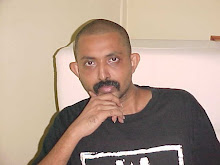
The other case involved Gopalan Nair.

And i just blogged earlier today about the third case involving the "kangaroo court" activists who were found in contempt of court and will be sentenced on Thursday.

WSJA fined $25,000
By Zakir Hussain, Correspondent
25 Nov 08, ST Online


THE High Court has found Wall Street Journal Asia (WSJA) to be in contempt of court and fined it $25,000 - the highest ever fine meted out for such a case in Singapore.

Justice Tay Yong Kwang on Tuesday said the fine would serve to denounce the conduct of the newspaper, 'a repeat offender', and hopefully deter future transgressions.

He also ordered the Hong Kong-based publication to pay costs of $30,000.

Previous fines for contempt of court involving newspapers have been in the thousands of dollars. The highest - $10,000 - was meted out to American academic Christopher Lingle in 1995 for an article he wrote in the International Herald Tribune that insinuated the judiciary was compliant.

In the present case, the Attorney-General took Dow Jones - the publisher of the WSJA - to court over three articles published in the newspaper in June and July this year.

The first was an editorial on Singapore's democracy, arising out of a May hearing to assess damages that Singapore Democratic Party chief Chee Soon Juan and others had to pay Prime Minister Lee Hsien Loong and Minister Mentor Lee Kuan Yew for libel.

The second was a letter by Dr Chee, in reply to a rebuttal of that editorial by MM Lee?s press secretary.

The third article was another editorial, on the International Bar Association?s Human Rights Institute's report on the Singapore judiciary in July.

At a hearing on Tuesday morning, Justice Tay found that all three articles contained insinuations that the judiciary was biased, impartial and lacked independence.

The articles also implied that the judiciary was subservient to Minister Mentor Lee and the People's Action Party, and was a tool for silencing political dissent.

These allegations had the inherent tendency to interfere with the administration of justice and risked undermining public confidence in the courts, Justice Tay said.

His ruling came three weeks after he heard arguments from Attorney-General Walter Woon and Dow Jones' lawyer, Senior Counsel Philip Jeyaretnam.

In a 42-page written judgment which he summarised in court, Justice Tay noted that although the paper's earlier instances of contempt of court were committed about two decades ago - in 1985 and 1989 - 'that is not a very long period of time in the context of corporate history'.

In 1985, when the paper was called the Asian Wall Street Journal, Dow Jones and then-editor Fred Zimmerman were fined $6,000 and $2,000 respectively for a report on the conviction of then-Workers' Party leader J.B. Jeyaretnam.

In 1991, Dow Jones and then-editor Barry Wain were each fined $4,000 for implying that a judge hearing a libel case was biased towards Mr Lee Kuan Yew. Justice Tay also cited three other aggravating factors against the WSJA:

One, the offending articles appeared in the span of three weeks, in a respectable journal with a wide and sophisticated readership.

Two, the constant refrain of the imputations against the judiciary's independence destablised the rule of law and threatened to bring down the reputation of Singapore.

Three, the WSJA had not offered any apology but maintained that the articles were not in contempt.

WSJA has seven days from Tuesday to pay the fine.

Said a Dow Jones spokesman: 'We are currently reviewing the decision.'
Reports from AFP, Reuters and AP,
Wall Street Journal Asia Publisher Fined In Singapore

SINGAPORE (AFP)--The publisher of the Wall Street Journal Asia was found in contempt of court Tuesday and ordered to pay more than $16,000 in damages for questioning Singapore's judicial integrity.

The judgment against Dow Jones Publishing Company (Asia) Inc. is the latest court ruling against critics of the Singapore government.

High Court Justice Tay Yong Kwang found the publisher in contempt for two editorials: "Democracy in Singapore," published on June 26 this year, and " Judging Singapore's Judiciary," which appeared on July 15.

He said that a letter that the business daily published in July by Chee Soon Juan, secretary general of the opposition Singapore Democratic Party, or SDP, was also in contempt, and fined the newspaper a total of SGD25,000 ($16,490).

"In my opinion, all three publications, individually as well as collectively, contained insinuations of bias, lack of impartiality and lack of independence and implied that the judiciary is subservient to Mr Lee and/or the PAP and is a tool for silencing political dissent," the judge wrote.

He was referring to Singapore's founding father Lee Kuan Yew, and the People's Action Party, or PAP, which has ruled the city-state since 1959.

Tay noted that the editorials and the letter appeared within a relatively short period of less than three weeks while a defamation case involving Chee and Lee continued, and while charges against an American blogger, Gopalan Nair, were also before Singapore's courts.

"The three publications...are in contempt of court because the allegations by way of insinuations clearly possess the inherent tendency to interfere with the administration of justice," the judge wrote.

"A judiciary which is not impartial and independent is as good as salt that has lost its flavor."

Last month, a Singapore judge ordered the SDP party, Chee - who is bankrupt - and his sister, to pay $610,000 in damages for defaming Lee and his son, Prime Minister Lee Hsien Loong.

In September, the blogger Nair was sentenced to three months' jail for accusing a Singapore judge of "prostituting herself." He made the comment in a blog about the case involving Chee and the Lees.

Tay said there were aggravating factors, including the fact that Dow Jones had been found in contempt on two earlier occasions in Singapore.

The publisher also failed to apologize, and maintained that the publications weren't in contempt, he said.

Defense counsel Philip Jeyaretnam declined to comment on the case, referring inquiries to Dow Jones.

A spokesman for the publisher said only that they were reviewing the court's decision. In a statement issued during the hearing, Dow Jones said it was defending its "right to report and comment on matters of international interest, including matters concerning Singapore."

Singapore's leaders have won hundreds of thousands of dollars in damages from defamation suits filed against critics and foreign publications.

International human rights groups have accused the country's leaders of using courts to stifle dissent, but the leaders argue that suing for defamation is necessary to protect their reputations from unfounded attacks.

Singapore fines WSJ for contempt of court

SINGAPORE, Nov 25 (REUTERS) - A Singapore court has found the Wall Street Journal in contempt of court for publishing three articles relating to Singapore's judiciary, and fined it S$25,000 , court documents said on Tuesday.

Singapore's attorney general brought contempt of court charges against the publisher of the Asian edition of the Wall Street Journal, News Corp's Dow Jones & Co, and two of the newspaper's editors, Daniel Hertzberg and Christine Glancey.

The case was brought for two editorials and a letter written by opposition leader Chee Soon Juan about Singapore's judiciary in the newspaper.

"The three publications, read individually or collectively, are in contempt of court because of the allegations by way of insinuations clearly possess the inherent tendency to interfere with administration of justice," said Justice Tay Yong Kwang in his written judgement.

Tay said the fine, to be paid in seven days, was supposed to be a deterrent and denunciation of the paper's actions.

The court documents said the previous highest penalty for contempt of court was S$10,000.

A Dow Jones spokesman told Reuters the company was currently reviewing the court's decision.

During the trial, Singapore's attorney general argued that the Wall Street Journal was waging a 20-year campaign to smear the reputation of Singapore's courts. But Philip Jeyaretnam, a lawyer acting for the newspaper, said the claim was not true.

Singapore first took legal action against the Wall Street Journal in 1985 for contempt of court for an editorial commenting on the trial of late Singapore opposition leader J.B. Jeyaretnam. The Wall Street Journal apologised and was fined $7,600, according to newspaper reports.

Singapore leaders have won damages, settlements and apologies in the past from foreign media groups when they reported on local politics, including The Economist, the Far Eastern Economic Review, Bloomberg News and the Financial Times.

Singapore rules Journal in contempt of court
By ALEX KENNEDY, Associated Press Writer


SINGAPORE - Singapore's High Court ruled the Wall Street Journal Asia in contempt of court for publishing two editorials and a letter to the editor that the government says damaged the reputation of the country's judicial system.

The court also fined the newspaper 25,000 Singapore dollars ($16,400).

Justice Tay Yong Kwang ruled Tuesday against the newspaper and two of its editors, three weeks after Attorney General Walter Woon argued the editorials published in June and July questioned the judiciary's independence from Prime Minister Lee Hsien Loong and the ruling People's Action Party. Not meting out punishment in this case would undermine the country's rule of law, the court said.

The letter to the editor was written by Chee Soon Juan, head of the opposition Singapore Democratic Party.

The editorials and the letter "contained insinuations of bias, lack of impartiality and lack of independence and implied that the judiciary is subservient to Mr. Lee and/or the PAP and is a tool for silencing political dissent," Tay wrote in the ruling.

"There can be no doubt that allegations of the nature mentioned above would immediately cast doubts on the judiciary in Singapore and undermine public confidence."

The newspaper's lawyer, Philip Jeyaretnam, was not immediately available for comment. The Wall Street Journal is published by Dow Jones & Co., a part of News Corp.

Singapore's leaders have sued journalists and political opponents several times in past years for alleged defamation. They have won lawsuits and damages against Bloomberg, the Economist and the International Herald Tribune.

Human Rights Watch called on Singapore last month to stop using defamation lawsuits to stifle criticism and bankrupt opposition politicians, citing the High Court's decision in October to order Chee and his party to pay $416,000 to Lee and his father, Lee Kuan Yew, in damages stemming from a 2006 defamation case.

Government leaders justify suing political opponents, saying it is necessary to defend their personal and professional reputations since it bears on their ability to govern properly and command respect from Singaporeans.

"Kangaroo court" activists found in contempt of court; To be sentenced on Thur, 9.30am

See my earlier post about this case

The news that John Tan, Shafi'ie and Isrizal (left to right in the picture) have been found in contempt of court is hardly surprising. Doesn't mean i'm not very disappointed and angered. (Sentencing is on 27 Nov, 9.30am, Court 6B)

The Attorney-General's Chambers (AGC) actions are akin to a big schoolyard bully. Ask such bullies to take on someone their own size and they'll either keep quiet or back away. That's probably the reason why they don't go after the International Bar Association's Human Rights Institute for their July 08 report or Lawyers' Rights Watch Canada for their Oct 07 report.

The following section is from yawning bread's article Conversation stoppers. Read the full article here.
With the advent of Walter Woon as Attorney-General, another conversation-stopper has been revived -– the contempt of court charge. Or was it in response to the sharp criticisms levelled by International Bar Associations' Human Rights Institute (IBAHRI) in its report published July this year?

The 72-page report had examined various instances over the years of questionable court decisions in political cases. It also put under the spotlight the fact that Supreme Court appointments often have no tenure, or are subject to renewal, which thus "casts doubt on the independence of all decisions made by judges."

The Wall Street Journal Asia, in covering this story, got into trouble for it.

Dow Jones, the newspaper's publisher, is currently facing contempt of court charges, together with editors Daniel Hertzberg and Christine Glancey. The Attorney-General's office claims that an editorial published in the newspaper, titled "Judging Singapore's Judiciary" alleged that the judiciary is "not independent" and "is biased and lacks integrity", as did another, titled "Democracy in Singapore". The latter was about on an exchange in court between Singapore’s Minister Mentor Lee Kuan Yew and Chee in a separate defamation case filed by Lee against the opposition leader.

Cited too was a letter to the editor by the opposition Singapore Democratic Party leader Chee Soon Juan, published in the daily on 9 July, touching also on the IBAHRI report.

Dow Jones issued a statement 4 November 2008, asserting their innocence and right to fair comment. "Today in court we defended our right to report and comment on matters of international interest, including matters concerning Singapore," it said.

"We also argued that in this instance, what we published simply does not constitute contempt of court."

Denying complaints that the court action was an infringement of free expression, Woon said the case was "not about the freedom of speech per se" but "about the rule of law and the vital role that the courts and judiciary play in its maintenance."

We'll come back to this later.

Not only are big media companies being charged with contempt of court, but so are intrepid activists John Tan, Isrizal Mohamed Isa and Muhammad Shafi'ie Syahmi Sariman. They are facing similar charges in a case separate from that of the Wall Street Journal, for wearing white T-shirts emblazoned with a grey kangaroo in judge's robes and holding a gavel. The prosecution alleges that in wearing such a T-shirt, they intended to convey the sense that Singapore courts are "kangaroo courts".

At the time, they were in the Supreme Court building to witness a hearing to assess damages against opposition leaders Chee Soon Juan, Chee Siok Chin and the Singapore Democratic Party, after the trio had been found by a court to have defamed Minister Mentor Lee Kuan Yew and Prime Minister Lee Hsien Loong.

According to Today newspaper, at one point, John Tan uttered the words "This is a kangaroo court" as Lee Kuan Yew walked past him in the building.

What good do such prosecutions do? Woon argued that it was to protect the rule of law. But is it necessary to shield courts and judges from criticism to achieve this?

Is it totally inconceivable that judges can be biased, that executive interference can occur? Just look at some countries, say, China, India, Malaysia or Turkey. If it can happen there, it can happen here.

And when someone believes it is happening, should it not be said? How do you cure an ill if you're not even allowed to draw attention to it? Do we put our judges in the same class as God, the Prophet and the Koran, infallible, beyond question or demurral?

If we are so concerned about safeguarding the integrity of our justice system, then make sure our courts act with the utmost impartiality and never even give the appearance of susceptibility to undue influence.

Penalising people for saying that our courts do not meet expected standards does not improve justice. It's just a conversation stopper. A silencer. Some might say that resorting to it is an admission that one cannot win the debate on evidence alone, in other words, it just gives people more reason to believe what one is trying to deny.

Drop the charges before we make an even bigger joke of the system.

Saturday, November 22, 2008

United Nations vote shows growing support of death penalty ban

UN vote shows growing support of death penalty ban
By JOHN HEILPRIN
Associated Press, 21 Nov 08


UNITED NATIONS (AP) — The U.N. General Assembly's human rights committee voted Thursday for the second year in a row to urge a global moratorium on the death penalty.

The United States sided with countries such as Iran, China and Syria in opposing the resolution.

The 105-48 vote marked a slight change from the 104-54 vote in the full General Assembly last December. About 30 nations abstained.

Supporters of the ban argue there's no conclusive evidence that the death penalty serves as a meaningful deterrent to crime and the risk of injustice is too high. Nations opposing the ban say the death penalty is effective in discouraging most serious crimes and remains legal under international law.

The vote in the human rights committee, though it includes all U.N. members, is not the final vote. Next month, the General Assembly will hold a final vote on the measure and the committee's vote is almost certain to be closely replicated there.

Though not legally binding, the voting does carry moral weight coming from the 192-nation world body that serves as a unique forum for debate and barometer of international opinion.

Amnesty International, which has been campaigning for the resolution, noted rising acceptance of a moratorium. In the 1990s, it was voted on twice in the General Assembly and failed.

On Thursday, the committee vote picked up one more nation than last year and six fewer opponents.

As of November, some 137 nations had abolished the death penalty in law or practice, compared with about 80 in 1988, according to Amnesty International figures.

Secretary-General Ban Ki-moon has been encouraged by the trend in many areas of the world toward ultimately abolishing the death penalty, U.N. spokeswoman Michele Montas said.

Last year there were at least 1,252 people put to death by 24 nations and 3,347 others sentenced to death in 51 countries, according to Amnesty International.

Terlingen (Yvonne Terlingen heads Amnesty International's United Nations office in New York) urged nations such as Japan that increased the rate of executions in the past year to "take immediate steps to implement the resolution."

The resolution has been spearheaded by Italy and supported by the Vatican, a leading opponent of capital punishment. Also leading the campaign has been the European Union, which requires its 27 members to outlaw capital punishment.

Countries renew commitment to ending death penalty worldwide
DPA, 21 Nov 08


In a step to renewing the United Nation's moratorium on the death penalty, a UN panel Thursday voted 105-48 to once again submit a resolution to the General Assembly, dpa reported.

Last year, the General Assembly for the first time ever voted to adopt a moratorium on the death penalty, acting on an initiative in the human rights committee that was headed by Italy.

The vote appears headed to becoming an annual event as Italy and other opponents of the death penalty try to increase the margin of passage and convince holdouts like the United States and Arab and Islamic states like Saudi Arabia, Malaysia, Yemen, Pakistan and Egypt.

Asian countries voting against the moratorium included China, Japan, North Korea and Singapore.

In Thursday's vote in the human rights committee, the US was one of 48 countries voting against the measure. The moratorium passed the committee with 105 votes this year, better than last year's committee vote of 99-52.

The outcome was greeted by Italy's UN Ambassador Guilio Terzi, who said the vote confirmed the global trend toward the abolition of the death penalty.

"This year's increase in the number of votes cast in favour of the resolution reaching the unprecendented figure of 105 shows the growing support among the membership on an issue to which Italy and its European partners attach a great deal of importance," Terzi said.

The resolution adopted by the human rights committee, known also as the Third Committee, welcomed the increasing number of countries that decided "to apply the moratorium on executions and the global trend towards the abolition of the death penalty."

The moratorium resolution will be sent to the 192-nation assembly for a final vote. In December 2007, the Assembly backed the moratorium in a 104-54 vote.

The moratorium has received strong support from the EU and many human rights groups, which gathered a petition with some 5 million signatures that was handed over to the president of the UN General Assembly in October.

According to Amnesty International, 133 countries have abolished the death penalty or stopped carrying out executions, and only 64 countries and territories use the death penalty.

During 2007, 24 countries executed 1,252 people compared to 1,591 in 2006.

UN reinforces call to end executions
Amnesty International, 20 Nov 08


A record number of countries have given their support to the campaign to end capital punishment.

On Thursday, a large majority of states from all regions adopted a second United Nations resolution calling for a moratorium on the use of the death penalty.

Amnesty International has welcomed the breakthrough for the resolution, which was adopted in the UN General Assembly (Third Committee). The number of co-sponsors has risen to 89, two more than last year.

The increased support for this resolution is yet further evidence of the worldwide trend towards the abolition of the death penalty.

105 countries voted in favour of the draft resolution, 48 voted against and 31 abstained. A range of amendments proposed by a small minority of pro-death penalty countries were overwhelmingly defeated.
“We urge all states that still carry out executions to take immediate steps to implement the resolution and establish a moratorium on executions," says Amnesty International's Yvonne Terlingen,

137 countries have abolished the death penalty in law or practice, as of November 2008. During 2007, at least 1,252 people were executed in 24 countries. At least 3,347 people were sentenced to death in 51 countries.

The decrease in countries carrying out executions is dramatic. In 1989, executions were carried out in 100 states. In 2007, Amnesty International recorded executions in 24 countries.

The draft resolution adopted on Thursday by the Third Committee of the General Assembly has still to be adopted by the General Assembly sitting in plenary in December.

Thursday, November 20, 2008

Gopalan Nair released from prison today morning; Banned from returning to Singapore

According to UncleYap's latest blogpost today (see here for my posts on Gopalan Nair),
I went to Queenstown Remand Prison this morning to await for him but I didn't know that famiLEE LEEgime took him out on a mata van to ICA to return him pass port and process his stay until 26.Nov.2008. He is banned to return to Singapore after that. I spoke to him on telephone just few minutes ago. He is OK and happy.

Singapore bloggers setting up community moderation panel

By Elizabeth Looi
The Nut Graph, 18 Nov 08


PETALING JAYA, 14 Nov 2008: While Malaysia has been debating for the past 30 years about whether or not to form a media or press council, Singaporean bloggers are planning to start their very own community moderation panel.

According to Assistant Professor Cherian George, one of the 13 bloggers who initiated the idea, the panel is to allow Singaporeans to have self-regulation when dealing with offensive or other controversial internet content.

The panel will be independent and will not include government officials, he told The Nut Graph in a telephone interview.

"The panel's role would be to assess content that some regard as unacceptable. It would have based its judgements on clear principles, and not necessarily on feedback from the majority because the majority could be wrong.

"If the panel finds that someone has gone too far with his comments, it can come out strongly to criticise and condemn the statement," said George, who heads the Journalism and Publishing Division at the Wee Kim Wee School of Communication and Information, Nanyang Technological University.

George believes that extremists who always make hateful statements on the internet would slowly learn that such comments are not acceptable in a moderate society. The panel might not stop extremists, but it would at least marginalise them, he said, adding that such bottom-up influence could be more effective in the long run, since censoring the internet would not stop people from making offensive remarks.

"There are so many laws in Singapore such as [the] Defamation Act and Sedition Act, and people have been thrown into jail before, but did [these laws] stop others from doing the same thing?" he pointed out.

George said the panel would be an alternative platform for the people to turn to before taking legal action. "We think many Singaporeans will be satisfied if a credible panel stands up against offensive speech, and so they would feel less of a need to lodge police reports.

"Currently, the people have no choice but to resort to legal action if they find something offensive on the internet."

He said people would have to judge the panel based on its decisions. "Therefore, the panel will have to continue showing the public that its decisions are reasonable and reflective of Singaporeans' views," he said, adding that the bloggers hope to set up the panel in 2009.

Monday, November 17, 2008

Spirit of Asia's Mandela and the (mis)use of the Internal Security Act

While uploading this post at my other blog, i was also thinking about the use of the Internal Security Act, or ISA, in Singapore especially an article about Chia Thye Poh I read quite sometime ago when it was published in 2000.

One must also not forget that he was not the only one who was detained without trial in those days or even since then.

Click here for information about the use of the ISA in Singapore.

Another source of information would be Martyn See's blog. For instance his posts here, here, here, here and here.

These are but only two sources and there's more out there on the web if only one cares enough to look for it.
Spirit of Asia's Mandela


Photos of Chia Thye Poh's arrest in 1966. I got these photos, and there are others of him, here when i did a search. See also my earlier post.

Chia Thye Poh is a man of principle with an unbreakable spirit of upholding truth, peace, justice and democracy

"THE world's second longest serving prisoner of conscience" is a title that no one wants to be honoured with. Yet, it goes to show the unrelenting spirit of Singaporean Chia Thye Poh. Chia, a willowy and soft-spoken man of disarming politeness, is hardly the sort one imagines as a fiery revolutionary. Yet, he possesses qualities that left his jailers looking ridiculous, in despair and even envious. He is a man of principle with an unbreakable spirit of upholding truth, peace, justice and democracy.

Chia finally obtained his freedom on Nov 27, 1998, after 32 years of unjust detention and cruel restrictions. He spent more than 22 years in jail, mostly in solitary confinement. He was later exiled to Singapore's Sentosa Island for about three years. He was the island's only resident living in a one-room guardhouse.

The rest of the years, he was allowed to visit his parent's home on Singapore's main island. Nevertheless, he continued to be subject to restriction orders, curtailing his freedom of expression, association and movement.

I was attracted by the idea of visiting The Hague, the Netherlands, when my long-standing friend mentioned I could meet Chia - a man I came to know of while studying at the University of Manchester.

It was the student society that educated me about the ISA (Internal Security Act) - an inhumane and cruel weapon that has been used for decades by both the Singaporean and Malaysian ruling elite to silence, stifle and wipe out their political opponents and dissidents.

In no time, I was drawn into campaigning for the release of all prisoners of conscience, including Chia, under both Singapore's and Malaysia's ISA.

The campaign underlined the principle that no one should be detained without trial, irrespective of their political, religious or ideological beliefs. Everyone has the right to a fair trial. I share this view.

My friend invited Chia to his house for lunch. We picked him up at Central Station. It was my first time meeting Chia. He was very approachable. We introduced ourselves and began chatting in the car.

Freedom snatched at 25

Chia has been longing for a just and democratic society since his student days. He read Physics in Nanyang University. After graduation, he worked for a short time as a secondary teacher. He then joined the university as a graduate assistant. His ambition then was to travel abroad to read for his Master's degree in physics.

In 1963, just before the general election was to be held, Lee Kuan Yew ordered a mass arrest of political activists. It was designed to prevent opposition leaders from taking part in the elections. At that juncture, Chia came forward to replace one of the detained candidates.

He was subsequently elected a member of parliament on a Barisan Sosialis (Socialist Front) ticket.

Chia was detained on Oct 28, 1966 for protesting against the PAP (People's Action Party) government. He and a number of other MPs staged a boycott of parliament over the issue of Singapore's secession from Malaysia in 1965. This crucial issue was never discussed in the Singaporean parliament. Nor were Singaporeans given the right to voice their opinion or decide the issue through a referendum.

In addition, he was among the peace campaigners calling for an end to the heavy American bombing of Indo-China. Because of his anti-PAP and anti-war activities, his freedom was cruelly snatched away by Lee Kuan Yew and the PAP government, both of whom have long held little respect for democracy and human rights.

'My spirit steeled'

The Singapore government never gave any explanation for Chia's detention for almost two decades. Only in 1985 did the government allege that he was a member of the Communist Party of Malaya (CPM). The government offered to release him if he agreed to give a public undertaking "disowning the CPM's use of force and terror".

Chia flatly rejected the offer. It would have been against his conscience to admit to something utterly untrue. He insisted that if the authorities had any evidence against him, then they should charge him in court and accord him an open and fair trial.

The authoritarian PAP regime tried very hard to break Chia's spirit and to extract a confession from him. Though he was not physically assaulted, he was subjected to intense mental and psychological torture.

They first put him in solitary confinement, transferring him from one prison cell to another. They even incarcerated him in what was called the "dark cell". It was totally dark and quiet, leaving him without any knowledge of night or day. To intimidate him, he was told that prisoners held in the dark cell would go insane in just a few days.

On one of his first nights in the cell, he could hear someone in the next cell violently kicking the cell door as if s/he had gone insane. He was also subjected to day-long interrogations in a freezing cold room and was deprived of reading material for a long period of time.

To sustain himself through such brutal incarceration, Chia engaged in dialogue with himself. He told himself that what he did was right and for the good of the people. If he were to allow himself go insane, then his life would be wasted. He taught himself to think positively. He constantly reminded himself of the less fortunate and the disabled who were living in worse conditions.

There was also a Chinese poem faintly scribbled on the prison wall by a previous prisoner that gave further encouragement and commitment to Chia. It read: Ten years behind bars Never too late Thousands of ordeals My spirit steeled.

When they failed to break his spirit, they resorted to pressuring his aged father into persuading him to give up. Instead of succumbing, Chia scolded the security agents for taking advantage of an old man.

Then they tried to tempt him into submission by driving him through Singapore, showing off the prosperity the city-state had achieved. They taunted him to sign "his confession paper" so that he could be part of the exciting new life that was Singapore. Otherwise, they told him, he would rot in jail.

Still they were unable to break his spirit.

Released at 57

Exiled to Sentosa Island in 1989, he was made to pay rent for the one-room guardhouse he stayed in, on the pretext that he was a "free" man. He was also made to purchase and prepare his own food. Because he had no money, he was offered a job as assistant curator of Sentosa Fort. He turned down the offer.

As a Grade Two civil servant, he knew he would have been barred from talking to the media without official approval. Instead, he successfully negotiated a position as a freelance translator for the Sentosa Development Corporation.

In 1997, Chia was allowed to accept a fellowship from the German government for politically persecuted persons. He spent a year in Germany studying democratic politics and German.

However, he remained barred from making political statements, addressing meetings, joining any organisation, taking part in political activities or associating with other former political detainees.

The PAP government was under constant international criticism and pressure as long as Chia was unjustifiably incarcerated and restricted. Failing to break his spirit, the PAP government reluctantly eased the restrictions on him. Eventually they gave up and succumbed to the international call for his unconditional release.

As soon as the restrictions were lifted, he issued a stern press statement condemning the ISA and called for its repeal. Being a victim of the notorious ISA, he is fully aware of how such a law can be used to trample human dignity and strike fear into the hearts and minds of people.

Contrary to some people's belief in Asian values, Chia maintains that the ISA is incompatible with these values. After all, the ISA is a creation of Western colonialists who used it to suppress the struggle for independence.

He also told the officer who notified him of the lifting of his restriction orders that he was still interested in politics. If in detention Chia did not break, in freedom Chia refused to be cowed. He refused to kowtow to the authoritarian PAP government.

Chia has paid dearly for his commitment to truth, and his belief in justice and democratic principles. When he was detained, he was only 25 years old. By the time he was freed unconditionally, he was 57. They had virtually taken away the best part of his life without even laying any charges against him, let alone giving him a trial in court.

As a consequence of his 23-year imprisonment, he is in poor health. His eyesight is impaired from many years spent in the dark cell. His lung problems recur from the same time. He has also undergone a prostate operation and has a weak bladder. And yet, though failing in health and haunted by nightmarish memories, he is determined to rebuild his life.

He is currently pursuing a Master's degree in development studies at the Institute of Social Studies in The Hague.

'One day, we'll all get there'

At The Hague, Chia and I chatted over lunch. I also noticed that Chia was very fond of my friend's three children, in particular the youngest one, who is barely three years old. He has missed a lot in life.

And yet, he harbours no personal grudge against anybody, including Lee Kuan Yew. He sees his struggle as not against individuals but against unjust policies and an unjust system.

"This is not about a personal battle. The struggle for democracy is much more than personal battles. I don't feel bitter towards anyone. Democracy is not about violence. They can jail me, but how are they going to jail democracy? One day, I'll get there - we'll all get there," he told me.

Keeping constant faith with his innocence, he proclaimed that he would not choose otherwise if he had to do it all over again. Deep down in his heart, he knows he cannot betray his conscience. He would rather sacrifice his life honourably for a just cause than to confess to a falsehood.

In pursuit of prosperity, the PAP regime has managed to cow a large section of Singaporeans into not valuing democracy and human rights. Today, few people in Singapore seem to care about Chia and what has happened to him. He is virtually unknown to young Singaporeans and those who do know him are too indifferent or too timid to say anything.

Nevertheless, outside Singapore, Chia is remembered and looked up to by many as an excellent example of the struggle for justice and democracy in Southeast Asia. He is a simple and humble man who possesses a great spirit. And those who long for reformasi will emulate his spirit. Political scientist Andrew Aeria has aptly described Chia as "a shining icon to the struggle for human rights and democracy".

ANG HIOK GAI is deputy secretary-general of Parti Rakyat Malaysia. This article, published in Bahasa Malaysia, Chinese and English, is written in commemoration of Human Rights' Month (November 2000).

Sunday, November 16, 2008

Videos & photos of Vigil for Peace in Sri Lanka

See here for my earlier post about this vigil. This photo is from a report by worldwithoutwar.sg about the Nov 15 event.

The first video is from this blogpost followed by TOC's video in a report about the event,


Friday, November 14, 2008

Death sentence for Malaysian trafficker in Singapore

This is a report from AFP,
Death sentence for Malaysian trafficker in Singapore

SINGAPORE, Nov 14, 2008 - A Malaysian drug trafficker has been sentenced to death in Singapore for a crime he committed as a teenager, a report and court official said Friday.

Yong Vui Kong was convicted of trafficking 47 grams (1.65 ounces) of heroin, The Straits Times website reported.

"Apparently he has been sentenced to death," a High Court official told AFP shortly after the sentence was issued. The official was unable to provide further details.

Yong was 19 when he became a drug courier last year, driving into Singapore from neighbouring Malaysia with the contraband, The Straits Times reported.

He wiped away tears after the sentence was delivered, the report said.

Under Singapore's tough anti-drug laws, the death penalty is mandatory for anyone caught trafficking more than 15 grams of heroin, 30 grams of cocaine or 500 grams of cannabis.

In December 2004 the city-state hanged 25-year-old Australian drug runner Nguyen Tuong Van, despite appeals for clemency by Prime Minister John Howard.

Two convicted African drug traffickers were put to death last year after their appeals for clemency were turned down and despite protests from the United Nations and rights activists.

Despite harsh criticism from rights groups, Singapore says the death penalty plays a key role in keeping crime rates low and is a strong deterrent to crime syndicates.
Here are four articles/reports on the death penalty in Singapore:
The Death Penalty for Drug Offences: A Violation of International Human Rights Law - 2007 report by the International Drug Policy Consortium

Singapore's stand at UN leaves many angered - 2007 news article from IPS

The Mandatory Death Sentence by K S Rajah, SC - 2005 essay for the Law Society of Singapore's Law Gazette

Singapore: The death penalty - A hidden toll of executions - 2004 Amnesty International report
These are two of the reports, mentioned above, which i've uploaded to my scribd,

Death Penalty for Drug Offences: A Violation of International Human Rights Law
Get your own at Scribd or explore others: Law International


Singapore Death Penalty - A hidden toll of executions
Get your own at Scribd or explore others: Business Law life human

Thursday, November 13, 2008

Gopalan Nair makes "unreserved apology"; will not be jailed for "contempt of court" charge

See my earlier post about this case.
Former S'pore lawyer Gopalan Nair let off with warning after pleading contempt of court
Posted: 13 November 2008, 1046 hrs


SINGAPORE: Former Singapore lawyer Gopalan Nair will not be jailed for contempt of court but has been given a telling-off and warning against making attacks against the Singapore Judiciary in future.

In contempt of court proceedings brought against Nair by the Attorney-General on Wednesday, Nair admitted in open court that he had made statements that were punishable as contempt of court.

He then went on to offer an unreserved apology to the court and to District Judge James Leong for offending comments that he had made.

The Attorney-General brought Nair to court for remarks made in the course of a trial in the Subordinate Courts between July and September this year, attacking the Singapore Judiciary and District Judge James Leong by stating that the courts were being abused for political ends.

He later repeated comments on the independence and impartiality of the Singapore Judiciary and District Judge James Leong in two blog postings about the trial.

On Wednesday however, Nair admitted in the Subordinate Courts that he had made utterances and statements that were punishable as contempt of court and went on to offer an unreserved apology to the court and to District Judge James Leong.

Nair also stated in public and on record, that he unconditionally withdrew the allegations made against the District Judge and any statements imputing that the Singapore courts are beholden to the government.

The former lawyer also undertook in public not to make such statements in future and to remove the offending blog posts as soon as possible.

In view of Nair's unreserved apologies and undertakings which were made in public and on record, the Deputy Solicitor-General told the court that the Attorney-General would not be pressing for a jail sentence.

Considering that Nair had purged his contempt and had shown remorse, District Judge Leslie Chew admonished Nair, warning him against launching attacks against the Singapore Judiciary in future.

Nair was also ordered to pay legal costs to the Attorney-General.

- CNA/sf

Nair apologises, warned
In view of his remorse, judge admonished him in open court
By Goh Chin Lian, ST ONline, 13 Nov 2008


FORMER Singaporean lawyer Gopalan Nair has made an unreserved apology to the court and a district judge for offending statements he made during a recent trial and on his blog.

Nair, now an American citizen, also unconditionally withdrew the allegations he made against District Judge James Leong and any statements imputing that the Singapore courts are beholden to the Government.

The Attorney-General's Chambers (AGC) said in an statement on Thursday that in view of Nair's apology and undertaking not to make such statements in the future and to remove the offending blog posts, the Attorney-General will not be pressing for the 58-year-old to be sent to jail.

The statement was released a day after a hearing in the Subordinate Court in an application by the Attorney-General to start contempt of court proceedings against Nair.

That hearing came two months after Nair began serving a three-month jail term on Sept 20 for insulting a High Court judge.

The latest hearing, on Wednesday, was over comments that Nair made during a trial in the Subordinate Courts presided over by District Judge James Leong. This was for offences under the Miscellaneous Offences (Public Order and Nuisance) Act.

During that trial, held on various dates between July 24 and Sept 5, Nair 'attacked the independence and impartiality of the Singapore Judiciary and District Judge James Leong by stating, inter alia, that the courts were being abused for political ends', the AGC said.

He also 'attacked the independence and impartiality of the Singapore Judiciary and District Judge James Leong in his blog 'Singapore Dissident'.'

Nair's comments were made in two blog postings - on Sept 1 titled 'Another classic case of trying to use the courts to silence dissent'; and on Sept 6 titled 'Convicted'.

The AGC said that at Wednesday's hearing, Nair 'admitted in open court that he had made the utterances and statements that were punishable as contempt of court'.

'He then went on to offer an unreserved apology to the court and to District Judge James Leong for the offending utterances and statements made by him'.

The statement added that Nair 'also proceeded to state, in public and on record, that he unconditionally withdrew the allegations made against District Judge James Leong and any statements imputing that the Singapore courts are beholden to the government'.

Nair 'further undertook in public not to make such statements in future and to remove the offending blog posts as soon as practicable'.

The case was heard in by District Judge Leslie Chew.

The AGC statement said District Judge Chew found that Nair 'had purged his contempt' and in view of his remorse, the judge admonished him in open court.

Nair was also 'warned against launching attacks against the Singapore Judiciary in future', and ordered to pay legal costs to the Attorney-General.

The next General Election guessing game is on

I've never had the opportunity to vote. Its been walkovers in the places that I've lived. I did have the opportunity to be a counting agent but that's the closest I got. Obviously it can't compare to actually casting a vote yourself. It'll be unfair to squarely put the blame on the opposition political parties for these walkovers or their performance generally.

One cannot see the General Election in isolation but as part of a system here which makes sure the ruling party stays in power. This system includes such things as the local media infected with bias; the Courts because defamation lawsuits (and whatever else the ruling party can come up with) are used to silence (or terribly mute) current and future opposition candidates and citizens alike (not all but most); government departments & agencies and generally a system which follows the saying he who pays the piper calls the tune, a still very real climate of fear, etc, etc.

With such seemingly insurmountable obstacles, its easy to just give up and say aiyah! f***lah its always been like that and will always be like that!. It doesn't have to be so. We have to do what we can however little it may be. Here are two links to articles which provide food for thought but most importantly templates for real action: Online politicization: Singapore’s source of new activists and What will you do when the elections come?.

Meanwhile, let the guessing games begin. For those political junkies, i recommend paying a visit to Singapore Elections as a start for a good fix.
PAP calling snap elections?
Tuesday, 11 November 2008
Singapore Democrats


There are rumours floating around that the PAP may call for a snap election. A few of SDP's friends have told us that some of their civil service friends have received letters asking them to undergo training as election officials.

There are also whispers that there is heightened activity at the Elections Department. In addition, some schools have been identified as nomination and polling stations.

Of course, these are unconfirmed stories. We have not been able to verify their accuracy.

We would not be surprised, however, if the PAP junked their five-year term and go for early polls. Given the economic situation which is going to get worse – much worse – in the coming few years, the PAP may be tempted to go for elections sooner rather than later.

Of course, Mr Lee Kuan Yew's age is a major factor. Without him, PAP would be without its ballast. The octogenarian PAP-founder is still at the front, back and centre of everything the Government does, even outperforming his prime minister son.

Groundwork for GE starts
By Aaron Low
Nov 12, 2008, ST Online


THE Elections Department has started preparations for the next general election, which is due at the latest by Feb 2, 2012.

It has identified 28,000 civil servants to become election officials, and has begun sending letters out to them.

Replying to queries from the Straits Times, a spokesman for the Elections Department confirmed that it started sending out the letters last month. These letters notify the public officers of their selection as election officials and the training they will undergo.

Officials will be given one of seven roles, ranging from the highest position of returning officer, who is overall in charge of organisation at a polling station, to counting assistants who tally up votes.

Training covers election laws, the electoral and voting procedures, and the handling of voting queues and issues on Polling Day, such as voters who turn up without proper identification.

Although 28,000 public servants are being called up, the actual number deployed will depend on the number of contested constituencies.

The spokesman added that prior to 2004, election officials were called up for training only after the writ to dissolve Parliament was issued by the President.

By law, Nomination Day has to be at be least five working days after the writ is issued.

In 2004, the Elections Department decided to call up civil servants for training much earlier.

In November that year - three years after the 2001 election - it sent notices to 20,000 civil servants to call them up for training.

The General Election was held eventually in May 2006.

The Elections Department spokesman told The Straits Times yesterday that some schools have been designated as polling stations for the next election.

'Such routine activities are part of our efforts to enhance service delivery,' she added.

Asked if the plans were an indicator of an early election, the spokesman said no.

Nevertheless, the moves by the Elections Department have sparked speculation that a snap election may be on the cards.

At a dialogue with young Singaporeans two weeks ago, Prime Minister Lee Hsien Loong, in response to a question whether polls could be held ahead of the 2012 deadline, said it was possible.

Tuesday, November 11, 2008

"Yes, jobs of foreign workers are being cut" says anonymous official from MOM

This is a report from Mizzima News,
Singapore cut jobs of migrants

by The The & Myint Maung
Monday, 10 November 2008 14:08

New Delhi – With at least 10 Burmese workers in Singapore getting laid off in the past two weeks, workers in Singapore worries that more will follow in the coming days as Singapore harbours itself from the impacts of global financial meltdown.

"I was on this job for two months. My job is to supervise about 100 workers under me. They fired me on the ground of inefficiency," a Burmese worker who was sacked from 'Engmech' Construction Company in Singapore told Mizzima.

While Engmech refuse to comment on the firing, the Burmese worker said he felt it could be due to the global financial crisis.

"Firing me from the job coincided with the fall in stock prices. I don't think they have any more projects to employ us. There might be further job cuts," he said.

Another worker, who was dismissed from 'Sheng Wong' Construction Company said, "They fired me on account of lack of language proficiency. They said that I could not understand their language well and neither could I do the jobs assigned to me well enough."

Apart from Burmese workers, over 180 foreign workers from Philippines, Bangladesh, India and China have been fired so far from their jobs at 'Enmech' Construction Company," a Burmese worker who was sacked from the company said.

According to him, most of them recently fired from their jobs have poor educational background and little experience. Some of them have been here for only a few months with work permits.

However, the company that fires the employees says the workers are sacked basically because of their poor performance and not as an impact of the global financial crisis.

Meanwhile, an official from Singapore's Ministry of Manpower, speaking on condition of anonymity, confirmed the job cuts saying, "Yes, jobs of foreign workers are being cut".

But the official declined to give details on why workers were being fired and how many have been dismissed from their jobs so far.

When contacted, most of the companies, said that they were not cutting jobs because of the global economic crisis. But Xinhua news agency quoting the Minister of Trade and Industry reported on October 20 that Singapore was affected by the international financial crisis. The report quoted the Minister Lim Hing Kiang said that the global economic slowdown has affected the Singapore economy and domestic companies.

A few days after that, Singapore companies resorted to wage cuts of foreign workers working in their companies, some Burmese workers said.

A Burmese worker, employed in a computer parts manufacturing company said, "Our Company has not cut jobs yet but they are going to resort to wage cuts. We have heard that those earning under US$ 3,000 will face 6 per cent cuts in their wages and those earning over US$ 3,000 will have to bear 20 per cent cuts."

"The newcomers are facing many more difficulties here. The old ones are suffering only wage cuts," he added.

About 50,000 to 60,000 Burmese workers earn a livelihood in Singapore.

Monday, November 10, 2008

Vigil on Nov 15 at Speakers Corner for peace in Sri Lanka; Circle of Violence - A short film about the conflict in Sri Lanka

Thanks to my friend Rachel for informing me of this event via facebook. You can sign-up/log-in to view the event here or visit the worldwithoutwar.sg website.

The Vigil for peace in Sri Lanka will be held at Hong Lim Park aka Speakers' Corner on Nov 15 (Sat) and is scheduled to begin at 5pm and end at 7pm. From the event's facebook page,
The civil war in Sri Lanka is one of the world's deadliest ongoing armed conflicts, causing significant harm to the population, environment and severe damage to the economy of the country. Now 25 years running, it has claimed at least 215,000 lives and displaced more than 1.5 million people.

The possibility of a lasting peace was raised when a cease-fire agreement was signed with international mediation in 2002. However on January 2, 2008 the government formally announced withdrawal from the ceasefire agreement and the conflict has escalated to critical levels in the recent months. Donor countries such as the United States, Canada, and Norway have shown deep regrets on this decision by the Sri Lankan government.

On September 9, 2008, the Government of Sri Lanka ordered all aid agencies to leave the northern areas of conflict and take their equipment with them. UN agencies and international relief organizations including Oxfam, Save The Children and the Danish Refugee Council that have been delivering food and medical aid to nearly 200,000 refugees in the affected region started to pull out.

The international community must take decisive steps to pressure the Government of Sri Lanka to abandon the path of militarism and opt for a negotiated political settlement.

Join us at Speakers' Corner, Singapore on this day to light a candle and show your support for peace in Sri Lanka.
Visit BBC World News' page on Sri Lanka and Amnesty International's reports and statements on the conflict there. And here for my previous blogpost about a one-man demonstration.

This is a 2007 short film by Journeyman Pictures called Circle of Violence about the conflict in Sri Lanka. You can either watch the 27min film here in one go or below in 3-parts,


Tuesday, November 4, 2008

A jaw-dropping, nearly-fell-off-the-chair moment

I realise such things shouldn't surprise me at all but still my jaw dropped when i read this report especially the section i've highlighted in bold.....
AG seeks 'substantial fine'
He asks court to send strong message in contempt of court case against WSJA.
By Zakir Hussain, ST Online, Nov 4, 2008


ATTORNEY-General Walter Woon has pressed for a substantial fine to be imposed on the Wall Street Journal Asia (WSJA) for contempt of court.

This was not the first time that the Hong-Kong based newspaper had attacked Singapore's judiciary, he told the High Court on Tuesday morning at the start of contempt of court proceedings against the WSJA. (Note: You might want to also refer to my blogpost about this case)

He called on the court to send a message that would stop others from launching similar attacks, which if left unchecked, would erode the rule of law here as they had in other democracies that the WSJA wanted Singapore to emulate.

Professor Woon said the three articles clearly insinuated that Singapore judges were biased.

There is space to criticise and debate policies, but 'leave the judiciary out of it. Judges are not political creatures, do not play favourites, (and) are neutral when it comes to politics', he said.

The Government is accusing Dow Jones Publishing (Asia) - which owns and publishes the WSJA - and Hong Kong-based editors Daniel Hertzberg and Christine Glancey of contempt over three articles published in June and July.

But Hertzberg and Glancey have applied to set aside the service of the court summons on them.

The court will hear their application at a later date. As such, only the case against Dow Jones is being heard this week.

Two of the offending articles are the newspaper's editorials, and the third is a letter from Singapore Democratic Party chief Chee Soon Juan.

These allege that the Singapore judiciary is not independent, is biased and lacks integrity, the Attorney-General's Chambers had said in September when it initiated proceedings against the WSJA and the editors.
As i've mentioned elsewhere, since the Attorney-General's at it, he might as well bring contempt of court proceedings against the two separate organisations who issued two separate reports which contain these as part of their conclusions,
The judiciary in Singapore has a good international reputation for the integrity of their judgments when adjudicating commercial cases that do not involve the interests of PAP members or their associates. However, in cases involving PAP litigants or PAP interests, there are concerns about an actual or apparent lack of impartiality and/or independence, which casts doubt on the decisions made in such cases. Although this may not go so far as claimed by some non-governmental organisations, which allege that the judiciary is entirely controlled by the will of the executive, there are sufficient reasons to worry about the influence of the executive over judicial decision making. Regardless of any actual interference, the reasonable suspicion of interference is sufficient. In addition, it appears that some of the objective characteristics of judicial independence, including security of tenure, separation from the executive branch and administrative independence may be absent from the Singapore judicial system - International Bar Association Human Rights Institute's July 08 report

A number of factors amply demonstrate that Singapore is not governed by the rule of law. These factors include: a demonstrated lack of independence of lawyers to stand between the state and citizens without fear of reprisals, inadequate statutory safeguards of the independence of the judiciary, a perception of executive influence over the judiciary in cases involving PAP interests, the stifling of public debate regarding issues of public importance through laws restricting freedom of assembly and freedom of expression to a degree incompatible with democracy, the threat of arbitrary arrest and detention through use of the ISA, and, the use, by members of the executive and the PAP, of defamation suits to punish and incapacitate government critics and members of opposition parties - Lawyers' Rights Watch Canada's Oct 07 report
I updated this blogpost at 1955hrs with these two reports:
Wall Street Journal raised doubts about Singapore judiciary: govt

SINGAPORE, Nov 4, 2008 (AFP) - The Wall Street Journal Asia has raised doubts about the integrity of Singapore's judiciary and should be held in contempt, the country's attorney-general told the High Court on Tuesday.

On the opening day of proceedings against the newspaper and two of its editors, Attorney-General Walter Woon said three articles it published in June and July this year had undermined the city-state's judiciary.

The articles were two editorials and a letter by Singapore pro-democracy activist Chee Soon Juan, which the attorney-general's office said alleged the judiciary was not independent, was biased and lacked integrity.

"This case is not about the freedom of speech per se," Woon said in his submissions to Justice Tay Yong Kwang.

"It is about the rule of law and the vital role that the courts and judiciary play in its maintenance."

Singapore does not stop anybody from criticising its laws but a line must be drawn when the criticisms become an attack on the integrity of the judge and the court, said Woon.

"We do not say you cannot criticise the laws... but you leave the judiciary out of it. (Our) judges are not political creatures... the fact that they apply Singapore laws does not make them biased," he said.

Facing contempt charges are the newspaper's publisher Dow Jones Publishing Company (Asia), Inc, international editor Daniel Hertzberg and managing editor Christine Glancey.

Senior Counsel Philip Jeyaretnam, representing the Wall Street Journal Asia's publisher Dow Jones Publishing and the two editors concerned, argued that his clients had not undermined the court.

"It is necessary for your honour to consider whether there is one sole word that is in contempt of the court," he said.

After proceedings were adjourned for the day, Dow Jones released a statement defending its publication of the articles.

"Today in court we defended our right to report and comment on matters of international interest, including matters concerning Singapore," said the statement.

"We also argued that in this instance, what we published simply does not constitute contempt of court."

International human rights groups have accused Singapore leaders of using the courts to stifle dissent; they, in turn, argue this is necessary to protect their reputation from unfounded attacks.

Singapore's leaders have won hundreds of thousands of dollars in damages from defamation suits filed against critics and foreign publications.

Most recently, the Far Eastern Economic Review, was found by a High Court judge to have defamed the country's founding father Lee Kuan Yew and his son, Prime Minister Lee Hsien Loong.

The Far Eastern Economic Review is a sister publication of the Wall Street Journal Asia.

Singapore says WSJ wages two-decade judicial attack
By Melanie Lee, Reuters


SINGAPORE, Nov 4 - Singapore's attorney general accused the Wall Street Journal on Tuesday of waging a two-decade campaign to besmirch the Singapore judiciary, at the start of a contempt of court case brought against the newspaper.

Singapore's attorney general is seeking contempt proceedings against the publisher of the Asian edition of the Wall Street Journal, News Corp's Dow Jones & Co, and two of the newspaper's editors, Daniel Hertzberg and Christine Glancey. "Freedom of speech in Singapore allows a person to criticise government policy and the decisions of the courts. There is no fetter on public debate about policy," attorney general Walter Woon said in court.

"When discussion of a court's judgments becomes an attack on a judge or the judiciary, then the law of contempt of court steps in," he said.

Singapore first took legal action against the Wall Street Journal in 1985 for contempt of court for an editorial commenting on the trial of late Singapore opposition leader J.B. Jeyaretnam. The Wall Street Journal apologised and was fined $7,600, according to newspaper reports.

Woon said he was looking for a "substantial fine" to be imposed on Dow Jones in the current case, but was not looking to cripple the company financially.

The case is the latest in a string of legal actions brought by the Southeast Asian country against foreign news organisations.

The attorney general's office said the two editorials published in the Asian Wall Street Journal, entitled "Democracy in Singapore" and "Judging Singapore's Judiciary," alleged that Singapore's judiciary was "not independent" and "is biased and lacks integrity".

The lawyer representing Dow Jones Publishing Co Inc, Philip Jeyaretnam, said the two editorials were opinion pieces, with a smart and informal tone that should not be read as sarcastic or disrespectful.

"Newspapers don't conduct 25-year campaigns, and the Wall Street Journal is certainly not part of any campaign," Jeyaretnam said in his opening remarks to the court.

Jeyaretnam, the son of J.B. Jeyaretnam and a former president of Singapore's Law Society, said the defence of fair criticism should apply and the publication had shown no malice.

"The readership of the Wall Street Journal Asia is a discerning one ... It expects to hear different sides of any debate and to make up its own mind," he said.

Singapore leaders have won damages, settlements and apologies in the past from foreign media groups when they reported on local politics, including The Economist, the Far Eastern Economic Review, Bloomberg News and the Financial Times.

Contempt of court trials begin today; James Cook University suspends John Tan

These two trials begin today while a third is on the way. Refer to my earlier posts here, here and here.
Contempt of court trials begin tomorrow
Monday, 03 November 2008
Singapore Democrats


The trial for contempt of court against Mr John Tan, Mr Shafi'ie and Mr Isrizal will commence tomorrow at 10 am in Hight Court 6B. The three were charged for wearing T-shirts with a picture of a kangaroo. The hearing is expected to last from 4-6 Nov 08.

Attorney-General Walter Woon is asking for imprisonment or "other punishment as the court may impose", and for the cost of the legal action.

In meantime, the trial of the 18 Tak Boleh Tahan (TBT) activists in the Subordinate Courts has been adjourned because the contempt case was scheduled in the midst of the TBT trial (23 Oct 08-7 Nov 08) Mr Tan and Mr Shafi'ie are among the defendants.

The three are charged for wearing the T-shirts within and in the vicinity of the Supreme Court building when a hearing was being held before Judge Belinda Ang for the assessment of damages payable by Dr Chee Soon Juan, Ms Chee Siok Chin and the SDP to Mr Lee Kuan Yew and Mr Lee Hsien Loong.

In addition, Mr Tan is also cited for pointing to the picture of a kangaroo on his T-shirt and saying, "This is a kangaroo court" to Mr Lee Kuan Yew when the Minister Mentor walked past him outside the courtroom.

Mr Tan also pointed out that had it not been the Straits Times that first published the photograph with the "kangaroo three" and the current legal actions from the AG, the wearing of the T-shirts itself would never have impugned the reputation of the Singapore Judiciary.

Also starting tomorrow is the trial of Dow Jones, which publishes Wall Street Journal Asia (WSJA), Mr Daniel Hertzberg, Editor of WSJA, and Ms Christine Glancey, Managing Editor of WSJA.

The AG's Chambers are accusing the newspaper of alleging that the Singapore Judiciary is not independent, and that it is biased and lacks integrity by publishing three articles involving Dr Chee Soon Juan.

Jacob's update on 5 Nov, 0100hrs: The kangaroo t-shirts trial has been adjourned till Nov 24. Read about the adjournment, and a letter with regards to John Tan's suspension, here.
Meanwhile another disturbing development,
Australian university in Singapore suspends John Tan
Monday, 03 November 2008
Singapore Democrats


James Cook University (JCU) has suspended Mr John Tan from his position as a lecturer. This is because Mr Tan, who is also the assistant secretary-general of the Singapore Democrats, is being charged with contempt of court by Attorney-General Walter Woon.

Mr Tan was informed of the decision on 21 Oct 08 when he was called in to the Dean's office and abruptly handed the letter informing him that he was suspended with immediate effect.

Mr Tan subsequently went to see Dr Dale Anderson, CEO of JCU. In that meeting, Dr Anderson showed Mr Tan an email that was sent to the university by a "Collin Lim".

The CEO admitted that he did not know who this Collin Lim was or if he was, in fact, a student at the university. The email noted Mr Tan's political activities and said that the psychology lecturer was associated with Dr Chee Soon Juan.

Dr Anderson also drew Mr Tan's attention to the fact that Collin had copied the email to the Minister for Education, Dr Ng Eng Hen.

When Mr Tan appealed to the academic principles of JCU, Dr Anderson replied that "half of the school is owned by Singapore" and implied that there was nothing he could do because he was under the employment of Singapore.

In response, 28 of Mr Tan's students and former students wrote letters of support of Mr Tan to the university to which Dr Anderson replied: "I cannot enter into a discussion on this matter until it is clear of court action."

The suspension is completely out of order for the following reasons:

* Mr Tan has not yet been convicted of the charge. The trial begins only tomorrow, 4 Nov 08. He was suspended on 21 Oct.
* The action appears to have been triggered by an email complaint that cited Mr Tan's association with Dr Chee Soon Juan and which was copied to Dr Ng Eng Hen.
* The suspension stayed despite an appeal by Mr Tan citing testimony from 28 of his students that he had gone about his work in a professional manner.

It is clear from the above that the University acted out of fear of the Singapore Government and suspended Mr John Tan for reasons other than academic considerations.

JCU's action is disgraceful on several counts. First, it has completely and utterly failed to uphold and protect academic principles and the rights of its employees.

Second, it jumped the gun by suspending Mr Tan before his conviction. The letter of suspension cites the AG taking contempt proceedings and not conviction.

Third, even if Mr Tan is convicted, does the university not have the obligation to protect the free speech of its employees?

Fourth, why was Mr Tan's attention drawn to the reference to Dr Ng Eng Hen? Is this not an indication that the suspension was politically motivated?

Would JCU have behaved in a similar way towards its academics back home in Australia? If not, how can the university claim to provide quality education to Singaporean students if it is so fearful of the Singapore Government? Is JCU in Singapore just to make money regardless of the type of education it provides or does it value academic freedom?

The university is based in Queensland but has campuses in Brisbane and Singapore.
And lastly a video. See here and here for my earlier posts on the trial of the tak boleh tahan activists.

Saturday, November 1, 2008

Attorney-General of Singapore goes after Gopalan Nair for contempt of court

According to this media release, the Attorney-General "has applied to court for contempt proceedings to be instituted against Gopalan Nair" for "stating, inter alia, that the courts were being abused for political ends" and "has also attacked the independence and impartiality of the Singapore Judiciary and District Judge Leong in his web log".

Gopalan Nair aka Singapore Dissident is currently in jail for 3 months. He began serving the sentence on Sept 20. See this blogpost about that case and also this video,


This will be the third contempt of court proceedings brought by the Attorney-General. The other two are against the "kangaroo court" activists and Wall Street Journal Asia.

Maybe, since he's at it, the Attorney-General should also bring contempt of court proceedings against the International Bar Association Human Rights Institute (IBAHRI) for their July 2008 report and/or Lawyers' Rights Watch Canada for their Oct 2007 report.

See my Nov 13 post for an update on Gopalan Nair's "contempt of court" charge