Showing posts with label AI report 08. Show all posts

Thursday, June 5, 2008

Singapore Dissident released on bail

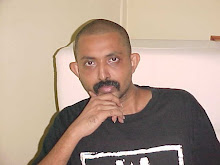
These are photos from AFP & AP of Gopalan Nair leaving the subordinate courts today. Click on each to go to source,


US blogger released on bail in Singapore

SINGAPORE (AFP) - A US-based blogger who allegedly accused a Singapore judge of "prostituting herself" was released on bail Thursday and had his passport confiscated.

A judge ordered Gopalan Nair, a former Singapore lawyer who is now a US citizen, to be released on SGD$5,000 bail (3,676 US) after more than four days in custody.

A prosecutor told court there was no need for him to be detained while further investigations were carried out.

Nair, 58, who declined comment to reporters, is due back in court for another hearing next Thursday.

He was arrested in the city-state on Saturday and charged Monday with insulting a public servant, his lawyer Chia Ti Lik earlier told AFP.

According to a court document, Nair is charged with insulting Justice Belinda Ang Saw Ean last week by sending an email which said she "was throughout prostituting herself during the entire proceedings, by being nothing more than an employee of Mr Lee Kuan Yew and his son and carrying out their orders".

Chia said the comments essentially repeated those Nair made in a recent blog about a defamation case filed by Singapore's leaders against an opposition party and its members.

In the blog, Nair strongly criticised a three-day legal hearing last week at which Singapore founding father Lee Kuan Yew and his son, Prime Minister Lee Hsien Loong, testified.

The US-based press freedom watchdog Committee to Protect Journalists (CPJ) expressed concern about Nair's case.

"Singapore's detention of Gopalan Nair for public comments about such a highly politicised case is completely unwarranted," said CPJ Asia Programme Coordinator Bob Dietz on the group's website.

"Freedom to criticise the judiciary is fundamental to a modern society. This case illustrates the Singapore government's ongoing commitment to silencing opposition voices both in print and online."

Lee Kuan Yew has dismissed the city-state's ranking near the bottom of a global press freedom index, saying Singaporeans are free to read whatever they want.

During his testimony last week, Lee Kuan Yew justified the country's strict political controls and pointed to Singapore's economic success as the "acid test" of his legacy.

On Saturday Nair had taunted authorities in a post on his blog, saying he was in Singapore at a particular hotel, and gave his phone number.

"I am now within your jurisdiction... What are you going to do about it?" wrote Nair, a former Workers' Party candidate for parliament.

He is charged with insulting a public servant, which on conviction carries a maximum fine of 5,000 dollars (3,660 US) or one year in prison.

Nair's lawyer told reporters outside court that he expects a fresh charge to be laid against his client, without elaborating.

Vigils today & tomorrow for Chees

Announcement: Vigil for CSJ and CSC

Dear Readers and Friends,

To express our solidarity with Dr Chee Soon Juan and Ms Chee Siok Chin, our ardent defenders of democracy, we will be holding a candle light vigil on Thursday at Changi where Ms Chee is serving her 10 days sentence, and then on Friday at Queenstown, where Dr Chee is serving his 12 days sentence.
Thursday, 5 June
When: 7.30pm - 11pm
Where: Changi Women's Prison

Friday, 6 June
When: 7.30pm - 11pm
Where: Queenstown Remand Prison
We invite you to come and light a candle for democracy.

Wednesday, June 4, 2008

Laughable comments by Singapore's Law Minister

Dear Mr Shanmugam, it is not the duty of citizens to blindly defend the country's judiciary. When it comes to politically-loaded cases, I believe quite a sizeable number of Singaporeans hold the view the judiciary lacks independence and that a powerful few are more equal than others.
Law Minister Shanmugam condemns attacks on judiciary
By S Ramesh, Channel NewsAsia | Posted: 04 June 2008 1811 hrs

SINGAPORE: Singapore's Law Minister K Shanmugam said it is the duty of all citizens to condemn attacks made on the country's judiciary.

He was responding to questions at a community event on Wednesday on the recent behaviour of Singapore's opposition politicians, Chee Soon Juan and Chee Siok Chin, at the High Court.

This was during a hearing to assess damages for defamation to be awarded to Singapore's Prime Minister Lee Hsien Loong and Minister Mentor Lee Kuan Yew.

The Chee siblings were found guilty of contempt of court and surrendered themselves on Wednesday to begin their jail sentences.

Mr Shanmugam said: "If you take a country like Singapore, based on democratic principles, and you look at the institutions that underpin our society, then conceptually, rule of law is important. It means independence of the judiciary and equality of everyone before the law.

"In order to have that – not just as a slogan but in reality – you need an independent judiciary that really protects the citizens and in fact, anyone who goes before the courts. People must have confidence that the judiciary is independent.

"In order to make sure that we protect the integrity of the judiciary and people's confidence in the judiciary is not affected, you have to be very, very strict with anyone who attacks the judiciary in scurrilous ways or calls into question its independence." - CNA/so

Singapore dissidents go to jail for contempt of court

SINGAPORE, 4 Jun (AFP) - - Two Singaporean dissidents convicted of committing contempt of court during a legal clash with the country's leaders opted Wednesday to go to jail because they could not afford an appeal.

Chee Soon Juan, secretary general of the Singapore Democratic Party (SDP), and his sister and fellow activist Chee Siok Chin had been sentenced to jail terms of 12 days and 10 days respectively for contempt of court.

Chee Siok Chin told AFP Wednesday that they were unable to pay the 2,000 Singapore dollars (1,470 US) in court fees required to file their appeals.

"We didn't want to delay the matter anymore. We thought we should start serving the sentence," she said by telephone before they were to report to judicial authorities to start their jail terms.

The siblings were ruled to be in contempt Monday by Justice Belinda Ang, who heard a defamation case filed by Prime Minister Lee Hsien Loong and his father, former premier Lee Kuan Yew, who is still a powerful cabinet member.

Insults flew when the two leaders took the witness stand last week and were cross-examined by the Chees, who defied the judge's admonitions about the way they grilled the ministers.

The hearings were aimed at setting the damages to be awarded following a judgement in favour of the leaders. No date has been announced for the final ruling.

The Lees have won hundreds of thousands of dollars in damages and out-of-court settlements from critics and foreign publications accused of harming their reputations.

Chee Soon Juan is one of a few Singaporeans who have publicly spoken against the hardline ruling People's Action Party (PAP) and has been to jail repeatedly for defying laws against protests and refusing to pay fines.

Press release: SDP stands united in facing challenges

SDP stands united in facing challenges

The jailing of Dr Chee Soon Juan and Ms Chee Siok Chin for contempt-of-court has not come as a surprise to the leadership of the Singapore Democratic Party. On the contrary the SDP is resolved and determined more than ever before in its struggle to uphold the rights of our citizens, in particular the workers, the unemployed, the small-and-medium-sized businessmen and the poor.

SDP remains undaunted in its uncompromising position of speaking up for the people who are denied their Constitutional rights to freedoms of speech, assembly and expression.

The ever increasing cost of living, the humongous salaries for PAP ministers, the rising health care costs, the secrecy shrouding our CPF money, the influx of foreign workers, the mushrooming of ERP gantries, the obstinacy of GIC and Temasek in refusing to be accountable and transparent will continue to feature prominently in our struggle against the authoritarian regime.

The tyranny of PAP can imprison our bodies and put us out of action, but no force on earth could imprison our spirits that are the mirror reflection of the sentiments of the general populace whose needs are trampled underfoot by a system that exists for the rich and powerful.

Our activities and programmes will continue while Dr Chee, secretary-general of SDP and Ms Chee, a central executive committee member of the party remain incarcerated.

For further details on news and other developments visit our website www.yoursdp.org that is becoming the alternative source of information, unlike the government controlled media whose credibility has sunk to the rock bottom.

Gandhi Ambalam
Chairman
Singapore Democratic Party

Tuesday, June 3, 2008

Chees to go to prison tomorrow

Latest from SDP on Chee Soon Juan & Chee Siok Chin,
Dr Chee and Ms Chee to go to prison tomorrow

Dr Chee Soon Juan and Ms Chee Siok Chin have decided not to delay their prison sentences and begin their imprisonment starting tomorrow.

The two SDP leaders have been convicted of contempt of court by Judge Belinda Ang and sentenced to 12 and 10 days imprisonment respectively. Their convictions arose out of the cross-examination of Mr Lee Kuan Yew and Mr Lee Hsien Loong in the assessment of damages hearing held at the Supreme Court last week.

Dr Chee and Ms Chee are unable to file their Notices of Appeal by the deadline because they cannot pay the $2,000 required to file their appeals. Judge Ang had given them until the close of business day of 4 Jun 08 to do so failing which they would go to jail the following day.

The defendants had, instead, written to the court and said that they would report tomorrow at 12 noon for their sentences.

Monday, June 2, 2008

Chees sentenced to 12 days & 10 days for contempt of court

I received the news earlier today and posted it on my twitter (see sidebar or here). I wasn't surprised. Just plain fed-up and disgusted with the courts for this blatant injustice. SDP's website will probably have more details soon. For now, here are two foreign news media reports about today,
S'pore opposition leader jailed for contempt of court

SINGAPORE, June 2 - A Singapore court sentenced an opposition leader to 12 days in jail on Monday for contempt of court during a case to determine the size of damages he has to pay for defaming the city state's leaders.

Chee Soon Juan, the leader of the Singapore Democratic Party , was found by the judge to have "scandalised the court" and "obstructed the administration of justice" during a three-day hearing to decide on damages to be awarded to Prime Minister Lee Hsien Loong and his father Lee Kuan Yew.

Chee's sister Chee Siok Chin, a senior member of the SDP, was also sentenced to a 10-day jail term for the same offence. The 12-day jail term was the longest awarded for this charge, said M. Ravi, Chee's legal advisor.

The judge said Chee accused the court of being biased and having pre-judged the defamation hearing, as well as not obeying the judge's orders to stop particular lines of questioning.

The SDP, Chee and his sister were found to have defamed the Lees in a 2006 article.

The defamation hearing last week, in which the Chees cross-examined the Lees, saw Chee Soon Juan calling Lee Kuan Yew a "pitiable figure" and Lee saying that Chee was a "near psychopath".

"At no point was there a deliberate attempt to do anything that would scandalise the court," Chee said to the court during Monday's hearing for contempt of court.

"There were many political arguments made and in the heat of the battle, Mr. Lee said some things and I said some things. It was in this context that some things were said and done," he said.

Singapore has been dominated by one party -- the People's Action Party -- since its independence in 1965. The Singapore Democratic Party is one of the more vocal opposition parties in Singapore but it did not win a seat in parliament in the last election in 2006.

(Reporting by Melanie Lee and Vivek Prakash; editing by Neil Chatterjee and Bill Tarrant)

Singapore opposition leader sentenced to jail for contempt

SINGAPORE (AFP) - - An opposition party leader who said justice had been "raped" and "kicked" during a defamation case filed by Singapore's leaders was sentenced to 12 days in jail Monday for contempt.

Chee Soon Juan, 45, secretary general of the Singapore Democratic Party (SDP), remains free pending his filing of an appeal by Wednesday.

Supreme Court Justice Belinda Ang Saw Ean also sentenced Chee's sister, SDP member Chee Siok Chin, to 10 days in jail for contempt. She is also free pending appeal.

Chee, his sister and their party have already been found guilty of libelling Singapore's founding father Lee Kuan Yew and his son, Prime Minister Lee Hsien Loong.

The contempt proceedings stemmed from comments they made during a three-day hearing before Ang last week to determine libel damages.

She ruled that Chee's behaviour "amounted to acts that scandalised the court" and adversely affected the administration of justice.

Chee is among a very few in Singapore to have spoken out against the People's Action Party (PAP), which has ruled since 1959.

In 2006 he was jailed for a then-unprecedented eight days for contempt after questioning the integrity of the judicial system in a statement he read during his bankruptcy hearing earlier that year.

He was declared bankrupt after failing to pay 500,000 Singapore dollars (366,300 US) in libel damages to Lee Kuan Yew and another former prime minister over remarks made in 2001.
This is another, more detailed AFP report,
Singapore opposition leader sentenced to jail for contempt

SINGAPORE (AFP) — A Singapore opposition leader who is among a rare few to publicly challenge the country's rulers was sentenced Monday to 12 days' jail for contempt, in the latest legal ruling against him.

A judge ruled Chee Soon Juan, 45, secretary general of the Singapore Democratic Party (SDP), had been in contempt because he said justice had been "raped" and "kicked" during a defamation case filed by Singapore's leaders against him.

He remains free but Supreme Court Justice Belinda Ang Saw Ean ruled that Chee will be taken to jail if he does not file an appeal by late Wednesday.

Ang also sentenced Chee's sister, SDP member Chee Siok Chin, to 10 days in jail for contempt. She, too, is free pending appeal.

Monday's hearing briefly brought Chee and the city-state's other outspoken opposition figure, J.B. Jeyaretnam, 82, together in a rare public joining of forces by the country's tiny opposition.

Jeyaretnam appeared in court as Chee's lawyer but later withdrew at Chee's request when Ang declined his application for more time to prepare his case. The lawyer said he had only received relevant transcripts the previous morning.

Jeyaretnam last month filed papers to register the new opposition Reform Party. He made political history in 1981 when he became the first opposition politician elected to parliament, which has been dominated by the People's Action Party (PAP) since 1959.

Ang rejected Jeyaretnam's argument that she withdraw from the contempt case. He said that since the contempt allegations arose from an earlier hearing before her, there could be a public perception of bias.

"I would urge your honour to consider very seriously whether you should hear this case," Jeyaretnam said.

"There is no option," the judge responded.

Chee, his sister, and their party have already been found guilty of libelling Singapore's founding father Lee Kuan Yew and his son, Prime Minister Lee Hsien Loong.

The contempt proceedings stemmed from comments they made during a three-day hearing before Ang last week to determine libel damages in that case.

Chee told the judge he did not intend to be in contempt and anything said came in "the heat of the battle" with his political opponents.

"Mr Lee had said a few things. I had countered them," Chee said.

In 2006 he was jailed for a then-unprecedented eight days for contempt after questioning the integrity of the judicial system in a statement he read during his bankruptcy hearing earlier that year.

He was declared bankrupt after failing to pay 500,000 Singapore dollars (366,300 US) in libel damages to Lee Kuan Yew and another former prime minister over remarks made in 2001.

Last Friday a judge fined Chee for speaking in public without a permit ahead of a general election in 2006. He will be jailed for five weeks if he does not pay the 5,000-dollar fine, the judge ruled.

Chee has served previous jail terms for convictions on similar charges.

His latest sentence on Monday came as a California-based blogger appeared in a separate courtroom charged over comments he made about the defamation case.

Gopalan Nair, a former Singapore lawyer who is now a US citizen, was arrested Saturday and charged Monday morning with insulting a public servant, his lawyer Chia Ti Lik told AFP.

Chia said Nair allegedly wrote an email to Supreme Court Justice Belinda Ang Saw Ean, the solicitor general, and attorney general essentially repeating comments he made in a recent blog about the defamation case.

In the blog, Nair strongly criticised last week's hearing involving Chee and the Lees.

A US embassy spokesman confirmed the arrest and said it is "monitoring the case closely."

The Lees have already won hundreds of thousands of dollars in damages from past lawsuits against members of the country's opposition and say that they need to protect their reputations from unfounded attacks.

Sunday, June 1, 2008

"A singular facility at bending over backwards"

As expected, Singapore's print & broadcast media were in full swing to put the best possible positive spin on the Lees getting a much-deserved drubbing in court during the 3 day hearing.

What left me thoroughly disappointed, furious, frustrated and sad (all at the same time), apart from the use of defamation lawsuits to silence their opponents and the bias media coverage, was the conduct of the courts. It was appalling! Sadly though, this was not the first time. It has happened so many times and not only in cases involving the use of defamation lawsuits. And each time, it leaves a bitter taste. Francis Seow expresses it succinctly when he writes about the judiciary in Singapore,
in politically-freighted cases have repeatedly demonstrated a singular facility at bending over backwards to render decisions favourable to the Singapore government and its leaders. Their judicial contortions have acquired an international notoriety
This passage is in Seow's latest book called Beyond Suspicion? The Singapore Judiciary which is excerpted below by asia sentinel,
Francis Seow was once the highly-regarded solicitor general of Singapore in the government of Lee Kuan Yew and president of the Singapore Law Society. After leaving the government, Seow made the mistake of defending people the government was prosecuting.

In 1988, Seow was taken in for questioning by the Internal Security Department. After 17 straight hours of invasive interrogation, he collapsed and was rushed to a hospital by officials who feared he had had a heart attack. While he was incarcerated, his law office was raided by authorities who removed all of his records. After he was released from detention, he announced plans to run as an opposition candidate and won a non-constituency parliamentary seat. The government filed six counts of tax evasion against him and ultimately convicted him in absentia after he had fled the country. He was disqualified from sitting in Parliament as a result of his conviction.

To show how far the government pursues its opponents, Seow had earlier won a seat on the board of the Singapore Turf Club, the republic's horse-racing organization. The government abolished the turf club, wiped out the entire board, appointed a new one and took over the newly formed racing club. At the time of his arrest, Seow was involved in a relationship with a Singaporean businesswoman who was financing a business deal through Bank Nationale de Paris. The bank suddenly dropped her line of credit and forced her out of the business deal. Bank officials at the time said the government had nothing to do with aborting the transaction.

While he was in the United States, the government abolished all appeals to the Judicial Committee of the Privy Council -- Singapore's last court of appeal in London -- which made him wary of returning to Singapore. Seow obtained a fellowship from Yale University and has lived in the United States since 1988. This is the preface to his book.

Justice in Singapore is Janus-faced.

The Singapore courts—when adjudicating commercial cases between two contending parties where neither the authorities nor the political élite are involved or interested—may be relied upon to administer justice according to the law. In this regard, Singapore judges have an overall reputation for the integrity of their judgments. The enthusiastic reports of international organizations, such as the Geneva-based World Economic Forum or the Hong Kong-based Political and Economic Risk Consultancy, have to be read subject to this important rider.

This book, however, is concerned with the other face of justice in Singapore: where these very same judges, sad to say, in politically-freighted cases have repeatedly demonstrated a singular facility at bending over backwards to render decisions favourable to the Singapore government and its leaders. Their judicial contortions have acquired an international notoriety that concerned human rights organizations, such as Amnesty International, the Geneva-based International Commission of Jurists, and latterly the Lawyers’ Human Rights Watch Canada, enough to send legal representatives to Singapore to observe the trial proceedings at first hand.

Their observations confirmed what many Singaporeans have known all along: that the political context of such cases invariably influences the judges in their decisions.

And yet, the Singapore judiciary was historically free and independent of the government of the day or of any other controlling legal authority, until the ruling People’s Action Party—with no viable political opposition to keep it balanced and in check—began to entrench itself in the body politic of the nation. In that time, Prime Minister Harry Lee Kuan Yew, now nominally senior minister but still the enduring éminence grise of the People’s Action Party (PAP) government, systematically gained control over the courts, which he exercises currently through his judicial point man and great friend, Yong Pung How, the chief justice.

In addition, Lee appoints only politically correct lawyers as judges whose loyalty he ensures with princely remunerations—well over and above the comparable market rates for judges worldwide.

Corruption oftentimes takes many forms and disguises: paying obscenely high salaries and bonuses to judges is one, for they inevitably assume the gratifying form of monthly retainers by the government for loyal services rendered or to be rendered. Given that he who pays the piper calls the tune, it is virtually impossible for judges to do justice by the citizens when the state or its leaders are involved as litigants, as this narrative will amply demonstrate.

Unlike previous defamation actions, the legal blitzkrieg herein—masterminded by Harry Lee Kuan Yew—was exceptional in the sheer number of PAP plaintiffs who retained in concert disparate law firms of high-priced lawyers and who, against valid objections and normal procedural laws, were allowed by the courts to maintain multiple lawsuits over the same matter against the defendants: lawyer and unsuccessful opposition electoral candidate Tang Liang Hong, his wife, Teo Siew Har, and, ultimately, his defence counsel, J. B. Jeyaretnam, who was also then the secretary general of the opposition Workers’ Party.

The insidious purpose of this unusual legal manoeuvre was intended to overwhelm the resources in personnel and finances of the defendants, and of Tang in particular, and to hamper their defence—a manoeuvre that was patently obvious to the judges but who, however, chose to turn a Nelsonian eye on these legal shenanigans.

Lee used to assert that the judiciary must be protected against “unjust attacks and slurs,” but, in truth, it is he who has not only disfigured the face of justice in Singapore but undermined its very foundation by politicizing it, as well as that of the legal profession. In the ensuing proceedings, counsel for Lee and the Prime Minister, Goh Chok Tong—Drew & Napier and Allen & Gledhill respectively—not to mention the lawyers for the other PAP plaintiffs, disgraced themselves and sullied the profession of the law by meekly allowing themselves to be led by their noses by the puppet-meister.

In an attempt to win their case at all costs, they not only suppressed important evidence advantageous to Tang but concealed it from the presiding judge, Justice Chao Hick Tin. Nor did they take any steps to correct the judge’s misconception of the facts at the subsequent judgmental hearing, consequently ensuring that the damages awarded against Tang would be humongous: thus perpetrating a travesty of justice by their studied silence. A classic case of the legal maxim, suppressio veri suggestio falsi—suppression of the truth is suggestion of the false.

Given their seniority at the bar, they should have known better. Together with the staff of the Supreme Court registry, they manipulated the practice and procedure of the court and its docket to disadvantage the defendants at every turn in their obscene rush to judgment.

In a closed society where the government has a finger in almost every pie of business and commerce and controls every aspect of community life right down to sporting and even kindergarten activities, it makes sound commercial sense, if nothing else, to keep on its good side for its capacity to distribute lucrative contracts and work to the politically correct.

Insofar as the legal profession is concerned, the cornucopia of legal work dispensed by the government and its many linked companies was, and is, immense and lucrative. It is bread-and-butter work. It is understandably the aspiration of many law firms to be the chosen receptacle of such official favors. The defamation case or rather cases against Tang Liang Hong and his wife, Teo Siew Har—and the opposition Workers’ Party then leader, J. B. Jeyaretnam—bring into sharp focus the reluctance of Singapore lawyers to represent clients who are anathema to the puissant Lee and his government. Even so, this is Asian value at its rawest: one does not muddy the source of business or possible business by being a contrarian.

In the related Jeyaretnam case, a self-conscious judge, S. Rajendran—aware of the allegations that the prime minister and the senior minister and their political confrérie were using the courts to smother their political opponents with a blanket of lawsuits and bereft them financially in order to remove them from the political scene—was constrained to stress, inter alia: Underlying questions relating to the independence of the judiciary and the likelihood of a fair hearing inevitably surface when political leaders resort to the courts to pursue their claims.

There are no private directives to a judge from the executive or from anyone else on how a case is to be conducted, how the judgment is to be phrased, how the law is to be applied or what matters of policy are to be considered. The judge is expected to decide each case impartially in accordance with the evidence and in accordance with the law. Indeed, the Singapore Constitution requires every judge, on appointment, to take an oath that he will discharge his judicial duties without fear or favour, affection or ill-will to the best of his ability and in accordance with law.

I would emphasize that what we have in Singapore is an open system of justice. All evidence and all arguments in all writ actions are presented in public. And the records of the courts are public documents available for public perusal. Hearings being in public, and only in public, any ruling and any judgment made by the court, must stand the test of public scrutiny. Any appeal to the court of appeal is also heard in public and must again stand the test of public scrutiny.

This is one of the great strengths of our system of law. Any judgment that does not stand the test of public scrutiny will tend to destroy the integrity of the judiciary—and will be a disservice to the people of Singapore.

The very fact that the judge felt obliged to descend into the obvious speaks volumes for the sorry state of a judiciary in bondage. It requires no special lexicon to interpret this well-known Shakespearean dictum: methinks the judge doth protest too much. With the best will in the world, is it really conceivable for any judge in Singapore to decide a case against Harry Lee Kuan Yew and his PAP cohorts?

Neither a wink nor a nod is necessary for a judge who values his position to decide in a certain way. Even if Lee’s judicial point man has not intimated the correct decision to his judges, Lee has ensured their loyalty with magnanimous monthly salaries and allowances topping them up with generous yearly bonuses. To paraphrase Vladimir I. Denisov, a Gorbachev-era Soviet parliamentarian: given their princely pay, perks and privileges of office, no Singaporean judge would be mad enough to rule against Lee and his political confrères.

The PAP mouthpiece, the Straits Times, in its news coverage of the visit of Lord Woolf, the Master of the Rolls in England to Singapore, bragged that the visiting English judge was reportedly “especially struck how courts here have built a new legal culture which is highly efficient and technology-oriented. For example, he noted that while court cases here could be heard within six months, quite a few lawsuits in his country were still taking more than two years to be resolved.

"It is very impressive how Singapore courts are so efficient in managing cases and using it.’” Lord Woolf was speaking, be it noted, on the mechanics of the courts system and not on the quality of justice! One should be able to separate the wood from the trees. The technology may be impressive but it is the administration of justice between people, and justice between individuals and state, and vice versa, that really matters ultimately.

The draconian Internal Security Act (ISA), Cap 143, which allows the arbitrary and indefinite detention of Lee’s political opponents, dissidents and media critics, among others, is noticeably being relegated to the back burner, as the courts are increasingly being used to suppress critical comments and viewpoints through threats of defamation actions and the payment of huge damages and ultimately bankruptcy.

Singapore has earned the dubious distinction of being a country whose leaders routinely use the libel laws as a weapon of repression. However, the courts cannot be freely resorted to, unless they are first made reliable tools of government: in other words, the judges chosen must be reliable. Tang’s legal predicament with its scads of lawsuits, and by extension to that of his defence counsel and political colleague, J. B. Jeyaretnam, proves their political reliability, beyond peradventure.

The news media, in the rankling words of Harry Lee Kuan Yew, must be subordinated to “the overriding needs of Singapore, and to the primacy of purpose of [his] government,” a feat he achieved with relative ease but at great cost to his international reputation and stature. The news media was subsequently reshaped into his subservient mouthpiece and that of his pap government. The legal and judicial system is not too far behind.

Once before, Dr. Joseph Goebbels, the Nazi minister of propaganda, dreamt of the same system of justice for the Third Reich where “justice must not become the mistress of the state, but must be the servant of state policy.” But where Adolf Hitler and his enthusiastic minister of propaganda failed, Harry Lee Kuan Yew is succeeding. It is not an idle, but a terrifying prospect.

Friday, May 30, 2008

Sentenced to prison or pay a fine in Singapore's kangaroo court

A Nov 07 video from sg human rights,


Singapore opposition leader fined for public speech

SINGAPORE, May 30 - A bankrupt Singapore opposition party leader was sentenced to five weeks in prison or pay a S$5,000 fine for speaking in public without a permit.

Chee Soon Juan, leader of the Singapore Democratic Party, was on Friday found guilty of the offence committed on April 8, 2006. He has six outstanding charges of speaking in public without a license between November 2005 and April 2006.

Singapore has tough laws on public gatherings, and protests are rare. An assembly of five or more people requires a police permit and offences under the Public Entertainments and Meetings Act could lead to fines as high as S$10,000 .

Chee, who pleaded not guilty on the grounds of his constitutional right to free speech, was made a bankrupt in February 2006 when he failed to pay libel damages of S$500,000 to former prime ministers Lee Kuan Yew and Goh Chok Tong.

"I continue to maintain that what I have done is well within the law and my constitutional rights," Chee told the court. Chee's lawyer M. Ravi said he will be appealing the conviction.

The state prosecutor had asked for a "substantial fine" to act as a deterrent for other "like-minded" individuals.

The Southeast Asian city defends its strict laws on public assembly citing the need for public order and safety.

The Singapore Democratic Party is one of the more vocal opposition parties in Singapore. It did not get into parliament in the last election in 2006 and 82 of the 84 elected parliamentary seats are held by the ruling People's Action Party which has been in power since Singapore's independence in 1965.

Chee has also been found guilty of defamation in cases filed by former prime minister Lee Kuan Yew and his son, Prime Minister Lee Hsien Loong. Singapore's high court has yet to rule on the amount of damages.

(Reporting by Melanie Lee; Editing by Jan Dahinten and Sanjeev Miglani)

Thursday, May 29, 2008

Amnesty's 2008 state of the world's human rights report


This Amnesty International Report 2008 mini-documentary shows a snapshot of the state of the world's human rights in 2007. Read here about what the report says about Singapore.